• Article
  • News
  • About us
  • Contact us
  • Dashboard
  • Home News Strohm And Baker Hughes Collaborate On Hybrid Composite Pipe System For Ultra-Deepwater Applications

    Strohm And Baker Hughes Collaborate On Hybrid Composite Pipe System For Ultra-Deepwater Applications

    BY Composights

    Published: 11 May 2026

    Strohm and Baker Hughes are collaborating on the development of a hybrid flexible pipe (HFP) system for ultra-deepwater offshore applications, combining thermoplastic composite pipe (TCP) technology with conventional flexible pipe architectures. The system is being positioned for subsea flowline and riser operations in water depths exceeding 3,000 metres.

    The HFP concept integrates the tensile performance of conventional flexible pipe systems with the lightweight structure and smooth internal bore characteristics of TCP technology. Manufactured using continuous fibre-reinforced thermoplastic composite materials, the system is designed to provide corrosion resistance while reducing suspended pipe weight during deepwater deployment.

    According to the companies, the hybrid configuration can reduce total system weight by approximately 50% compared to traditional flexible pipe solutions, while also lowering suspended weight in ultra-deepwater conditions. The lightweight composite structure supports spoolable installation and improved handling during offshore deployment operations.

    We approach product development from an end-user perspective, says Martin van Onna, CEO of Strohm. We developed the HFP with an emphasis on installability, in-place flexibility and design predictability, building on our longstanding relationship with Baker Hughes to create a solution that can be fast-tracked to market.
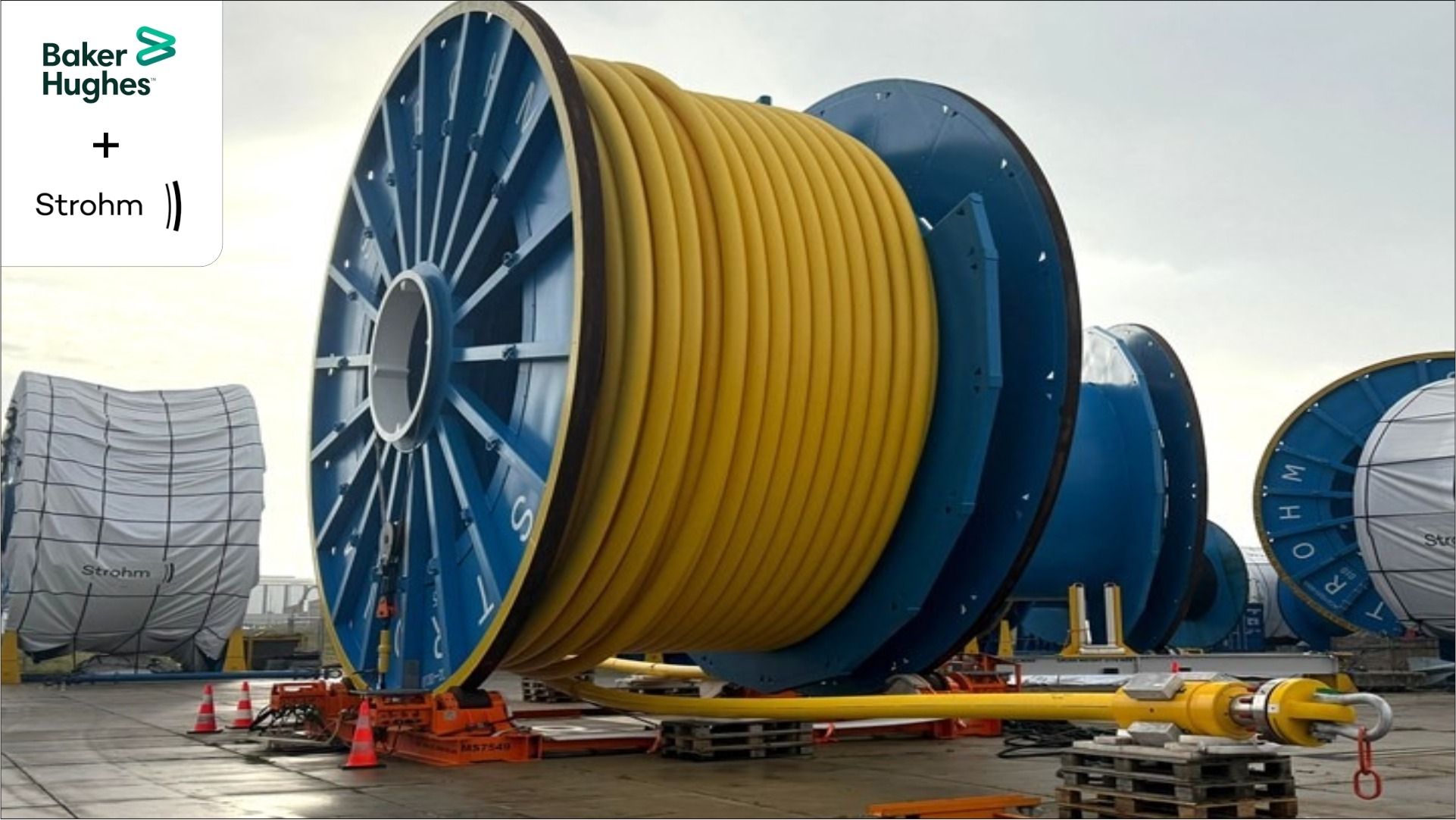
    The collaboration combines Baker Hughes experience in offshore flexible pipe systems with Strohm s thermoplastic composite pipe technology. The companies are targeting offshore projects requiring improved corrosion resistance, reduced installation complexity, and long-term operational reliability under high-pressure subsea environments.

    The development highlights growing adoption of thermoplastic composite materials within offshore energy infrastructure, particularly for deepwater pipeline systems where weight reduction, fatigue resistance, and corrosion management remain key engineering priorities.

    Source Strohm| Linkedin

    Home News Strohm And Baker Hughes Collaborate On Hybrid Composite Pipe System For Ultra-Deepwater Applications

    Strohm And Baker Hughes Collaborate On Hybrid Composite Pipe System For Ultra-Deepwater Applications

    BY Composights

    Published: 11 May 2026

    Strohm and Baker Hughes are collaborating on the development of a hybrid flexible pipe (HFP) system for ultra-deepwater offshore applications, combining thermoplastic composite pipe (TCP) technology with conventional flexible pipe architectures. The system is being positioned for subsea flowline and riser operations in water depths exceeding 3,000 metres.

    The HFP concept integrates the tensile performance of conventional flexible pipe systems with the lightweight structure and smooth internal bore characteristics of TCP technology. Manufactured using continuous fibre-reinforced thermoplastic composite materials, the system is designed to provide corrosion resistance while reducing suspended pipe weight during deepwater deployment.

    According to the companies, the hybrid configuration can reduce total system weight by approximately 50% compared to traditional flexible pipe solutions, while also lowering suspended weight in ultra-deepwater conditions. The lightweight composite structure supports spoolable installation and improved handling during offshore deployment operations.

    We approach product development from an end-user perspective, says Martin van Onna, CEO of Strohm. We developed the HFP with an emphasis on installability, in-place flexibility and design predictability, building on our longstanding relationship with Baker Hughes to create a solution that can be fast-tracked to market.

    The collaboration combines Baker Hughes experience in offshore flexible pipe systems with Strohm s thermoplastic composite pipe technology. The companies are targeting offshore projects requiring improved corrosion resistance, reduced installation complexity, and long-term operational reliability under high-pressure subsea environments.

    The development highlights growing adoption of thermoplastic composite materials within offshore energy infrastructure, particularly for deepwater pipeline systems where weight reduction, fatigue resistance, and corrosion management remain key engineering priorities.

    Source Strohm| Linkedin