Composite Machinery Highlights Growing Opportunities in Filament Winding Automation
BY Composights
Published: 25 May 2026


Composite Machinery is highlighting emerging opportunities in filament winding technology, driven by increasing demand for automated production of high-performance composite components across industrial applications.
Filament winding is an automated composite manufacturing process in which continuous fibers such as carbon, glass, or aramid are wound under tension onto a rotating mandrel to produce lightweight, high-strength structures. The process is widely used for manufacturing pressure vessels, pipes, and tubular components requiring high structural integrity and dimensional precision.
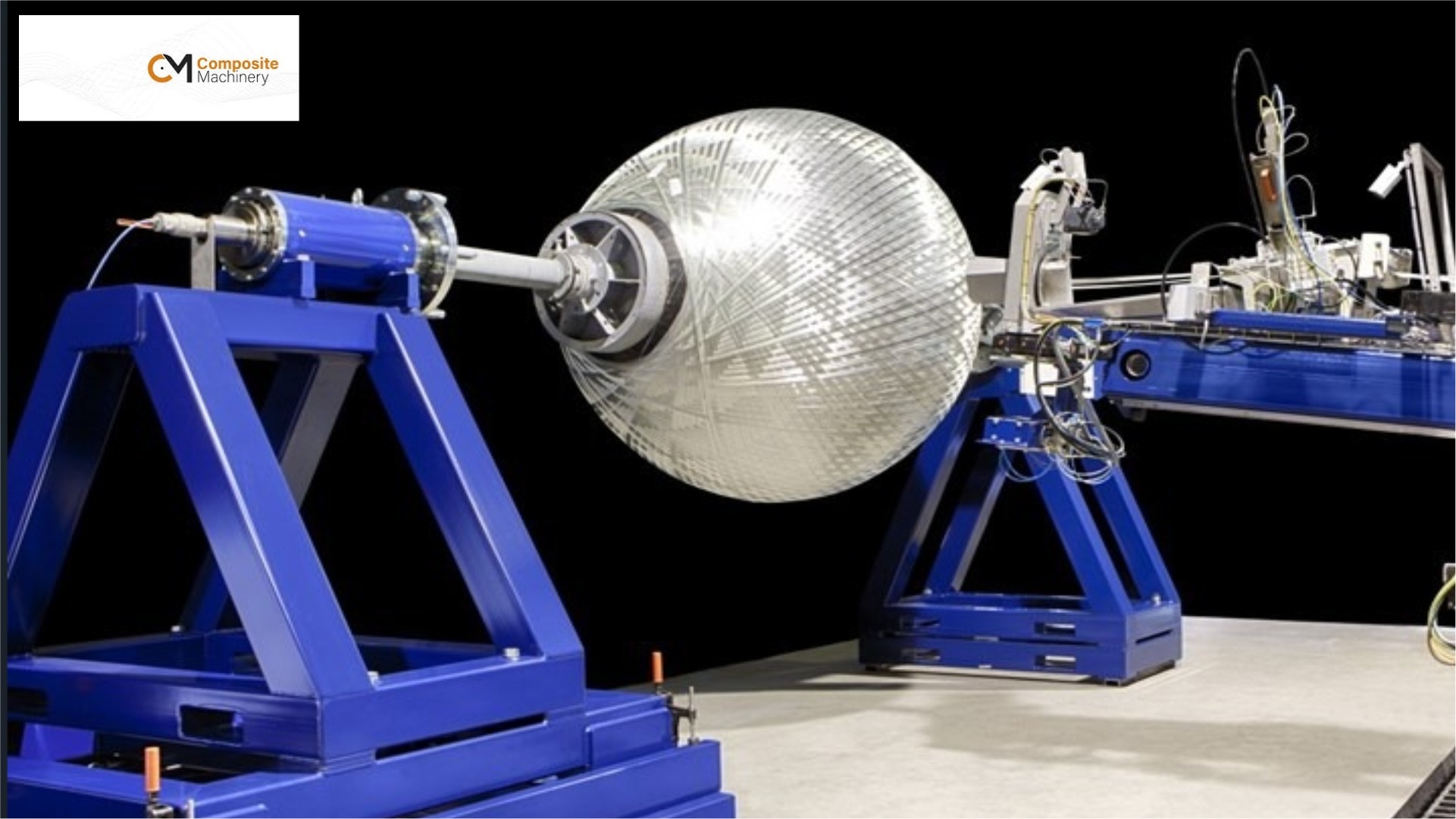
Advanced filament winding systems enable precise control of fiber orientation and resin distribution, allowing manufacturers to tailor mechanical performance to specific load conditions. Modern CNC-based winding machines are increasingly being adopted to improve repeatability, production speed, and scalability in composite manufacturing environments.
The technology is gaining traction particularly in composite overwrapped pressure vessels (COPVs), hydrogen storage systems, and industrial piping applications, where demand for lightweight and corrosion-resistant materials continues to grow. Automation in filament winding is also supporting higher production rates and improved quality consistency in serial manufacturing environments.
The growing adoption of filament winding reflects broader industry movement toward automated composite manufacturing processes, particularly in energy, aerospace, and infrastructure sectors where efficiency, performance, and scalability are critical.
Source: Composite Machinery |LinkedIn