CFRP Rotor Retaining Sleeve Enhances High-Speed Electric Motor Performance
BY Composights
Published: 05 Aug 2026
Share :


A carbon fiber-reinforced polymer (CFRP) rotor retaining sleeve has been developed to improve the reliability and performance of high-speed electric motors, providing a lightweight alternative to conventional magnet retention methods.
The component, manufactured for WEKA Elektrowerkzeuge, utilizes a proprietary press-fitting process that generates a high preload to firmly secure permanent magnets within the rotor. Unlike traditional assembly techniques, the process eliminates the need for adhesives or heat-based fitting, helping preserve material integrity while simplifying manufacturing.
By avoiding thermal assembly, the retaining sleeve minimizes the risk of heat-induced stresses that can affect component performance or dimensional accuracy. The mechanical press-fit also removes dependence on adhesive bonding, providing a durable solution for applications operating at elevated rotational speeds.
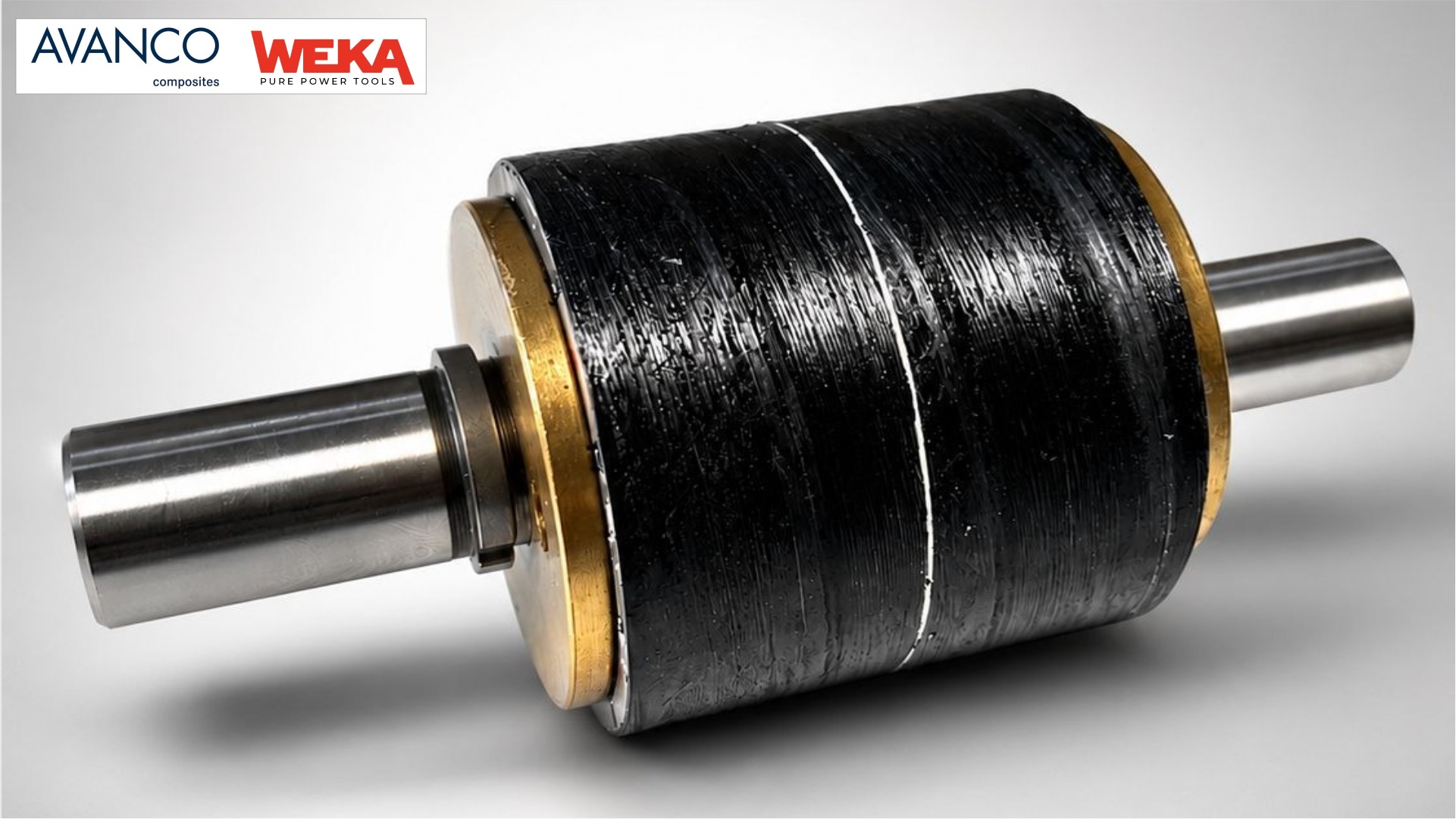
According to the company, the CFRP sleeve is capable of maintaining secure magnet retention even under demanding high-speed operating conditions, helping improve rotor stability and long-term reliability in electric drive systems.
The lightweight composite design is suitable for rotor diameters ranging from 30 mm to 300 mm, making it applicable across a broad range of automotive, industrial, and aerospace electric motor applications. Replacing heavier metallic retaining components with CFRP can also contribute to lower rotating mass and improved motor efficiency.
The development highlights the growing role of advanced composite materials in electric propulsion technologies, where lightweight construction, high mechanical strength, and dimensional stability are increasingly important for improving power density and overall system performance.
By combining a carbon fiber composite structure with an adhesive-free press-fit assembly method, the new retaining sleeve provides manufacturers with an efficient solution for securing rotor magnets in next-generation high-performance electric motors.
Source: Avanco Composites | LinkedIn