Arrow McLaren and Greene Tweed Advance IndyCar Performance with Composite Anti-Roll Bar Lever
BY Composights
Published: 31 Jul 2026
Share :


Arrow McLaren has partnered with Greene Tweed to introduce a lightweight composite anti-roll bar lever for its IndyCar race cars, replacing a conventional 7075 aluminum component with one manufactured from Xycomp DLF thermoplastic composite. The new component debuted earlier this season on Nolan Siegel's No. 6 Arrow McLaren Chevrolet at Barber Motorsports Park before being deployed across the team's entire IndyCar fleet from the Grand Prix of Long Beach in April.
The engineering program focused on replacing the existing machined aluminum anti-roll bar lever while maintaining identical structural and performance requirements. The anti-roll bar is a critical suspension component that controls chassis roll during cornering by distributing loads between the left and right suspension assemblies, directly influencing handling balance, tire load transfer, cornering stability, and traction.
For high-speed events such as the Indianapolis 500, where cars sustain prolonged lateral loads at average speeds exceeding 220 mph, maintaining consistent anti-roll bar stiffness is essential for preserving vehicle balance, aerodynamic stability, and tire performance throughout the 500-mile race.
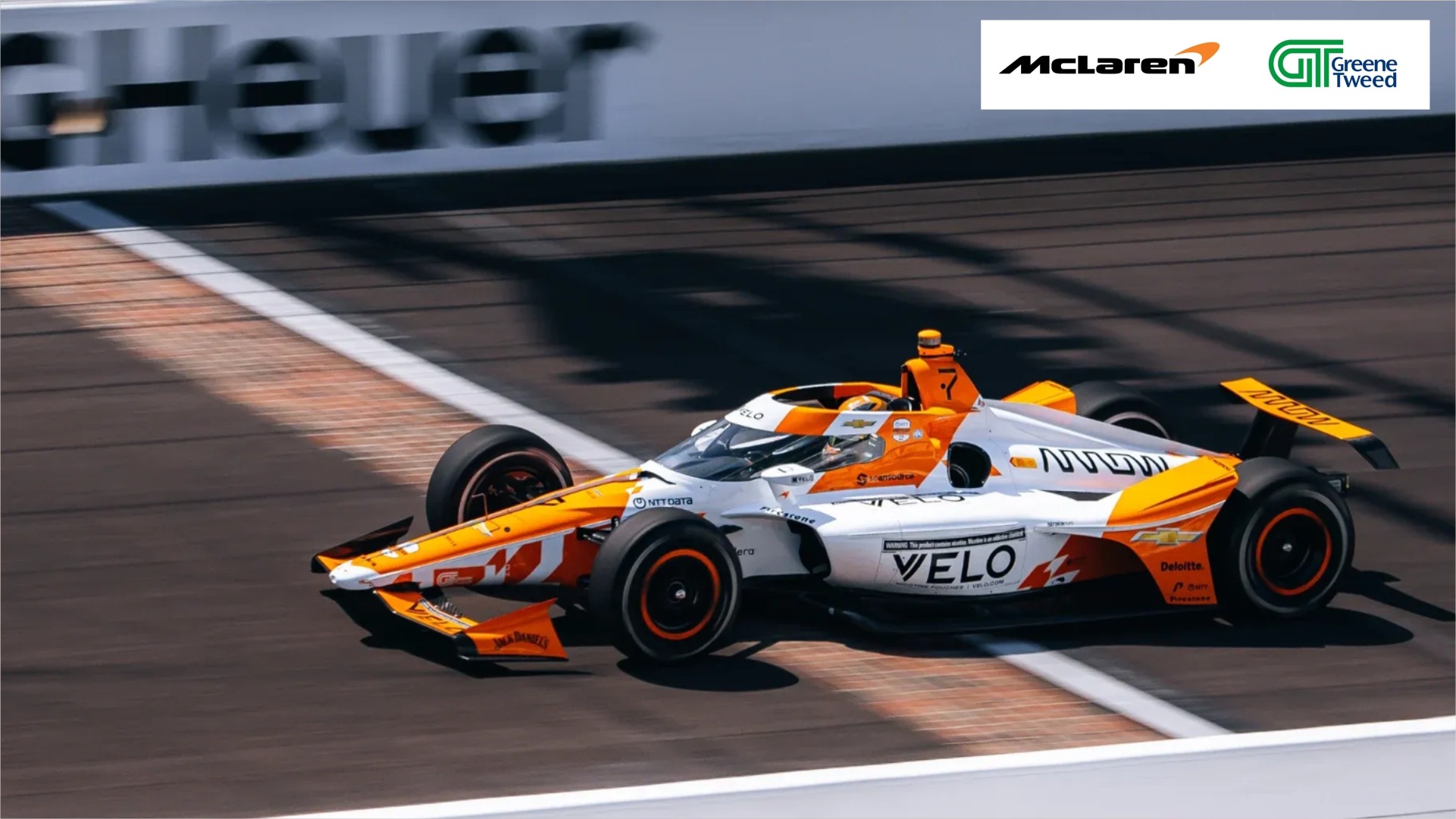
After evaluating several manufacturing approaches, the team selected Xycomp DLF , a high-performance thermoplastic composite developed as a lightweight replacement for metallic components operating in demanding environments. According to Greene Tweed, components redesigned with the material can typically achieve around 35% weight reduction while maintaining the required mechanical performance.
Rather than acting solely as a material supplier, Greene Tweed collaborated closely with Arrow McLaren throughout the design and validation process. The companies conducted extensive engineering assessments and real-world performance reviews to verify that the composite lever could withstand the mechanical loads, fatigue requirements, and operating conditions experienced during IndyCar competition.
The optimized component successfully met all structural and operational targets while reducing mass and minimizing the engineering and manufacturing effort required from the race team. Although the weight savings for a single part are relatively small, even minor reductions can contribute to measurable performance gains in the highly regulated NTT INDYCAR SERIES, where vehicle parity makes marginal improvements increasingly valuable.
The collaboration highlights the growing adoption of advanced thermoplastic composites in motorsport, where lightweight materials continue to replace metallic components to improve efficiency, durability, and competitive performance without compromising reliability.
Source: McLaren | News