• Article
  • News
  • About us
  • Contact us
  • Dashboard
  • Home News DITF Invests €4.2M in Next-Gen Textile Recycling and Fiber Composite Innovation

    DITF Invests €4.2M in Next-Gen Textile Recycling and Fiber Composite Innovation

    BY Composights

    Published: 21 Aug 2025

    Tags:

    high-performance composites | Composites Innovation | carbon fiber composite |

    The German Institutes of Textile and Fiber Research Denkendorf (DITF), Europe s largest textile research center, has initiated two major research projects aimed at tackling the global challenge of textile waste and advancing circularity in high-performance fibers. Together, the projects represent a total investment of more than 4.2 million.

    HiPerReF: Unlocking the potential of recycled carbon and glass fibers

    To address the limited recycling of advanced fiber composites, DITF will establish the HiPerReF (High-Performance Recycled Fibers) development center over the next two years. The facility will focus on building a complete process chain for industrial-scale recycling of carbon and glass fibers into semi-finished products.

    The goal is to create prepregs and non-porous composite plastics with a fiber volume fraction above 45%, ensuring they meet the high-performance requirements of industries such as aerospace, automotive, and wind energy. By optimizing the interaction of machines and equipment, HiPerReF aims to make recycled fibers a viable alternative to virgin materials in demanding applications.

    CYCLOTEXUM: From textile waste to fine yarns

    Alongside composites recycling, DITF is spearheading the CYCLOTEXUM project, which targets classic textile waste. The initiative combines mechanical, physical, and chemical recycling techniques to produce fine, uniform yarns from secondary raw materials.

    To ensure that innovation goes hand-in-hand with economic and environmental sustainability, researchers are applying Material Flow and Cost Accounting (MFCA), a method developed at DITF to evaluate both technological efficiency and economic viability.

    Driving a circular textile economy

    Through these projects, DITF is providing the national and global textile industry with practical solutions for a textile circular economy. By improving the recyclability of both high-performance composites and everyday textiles, the research paves the way for scaling sustainable fiber use across multiple industries.

    Source: www.ditf.de

    Home News DITF Invests €4.2M in Next-Gen Textile Recycling and Fiber Composite Innovation

    DITF Invests €4.2M in Next-Gen Textile Recycling and Fiber Composite Innovation

    BY Composights

    Published: 21 Aug 2025

    The German Institutes of Textile and Fiber Research Denkendorf (DITF), Europe s largest textile research center, has initiated two major research projects aimed at tackling the global challenge of textile waste and advancing circularity in high-performance fibers. Together, the projects represent a total investment of more than 4.2 million.

    HiPerReF: Unlocking the potential of recycled carbon and glass fibers

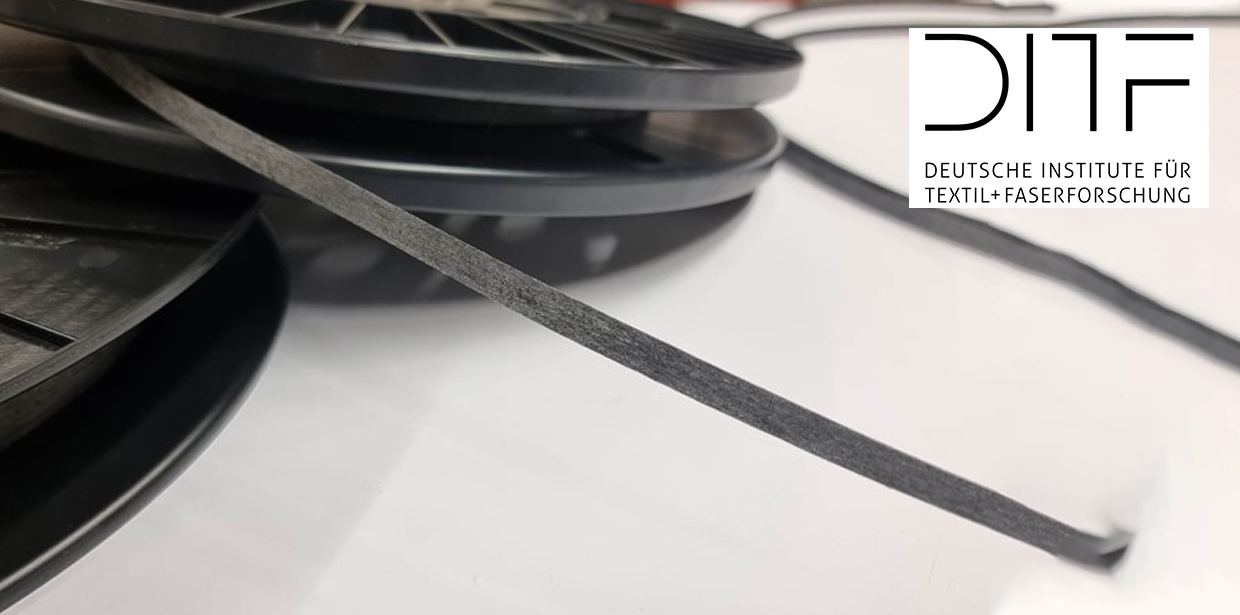
    To address the limited recycling of advanced fiber composites, DITF will establish the HiPerReF (High-Performance Recycled Fibers) development center over the next two years. The facility will focus on building a complete process chain for industrial-scale recycling of carbon and glass fibers into semi-finished products.

    The goal is to create prepregs and non-porous composite plastics with a fiber volume fraction above 45%, ensuring they meet the high-performance requirements of industries such as aerospace, automotive, and wind energy. By optimizing the interaction of machines and equipment, HiPerReF aims to make recycled fibers a viable alternative to virgin materials in demanding applications.
    CYCLOTEXUM: From textile waste to fine yarns

    Alongside composites recycling, DITF is spearheading the CYCLOTEXUM project, which targets classic textile waste. The initiative combines mechanical, physical, and chemical recycling techniques to produce fine, uniform yarns from secondary raw materials.

    To ensure that innovation goes hand-in-hand with economic and environmental sustainability, researchers are applying Material Flow and Cost Accounting (MFCA), a method developed at DITF to evaluate both technological efficiency and economic viability.

    Driving a circular textile economy

    Through these projects, DITF is providing the national and global textile industry with practical solutions for a textile circular economy. By improving the recyclability of both high-performance composites and everyday textiles, the research paves the way for scaling sustainable fiber use across multiple industries.

    Source: www.ditf.de