Composites have already proven their case on performance. Strength-to-weight, fatigue resistance, design freedom - that part of the argument is largely settled. What's now getting equal attention is a different question: how fast can these materials actually be processed?
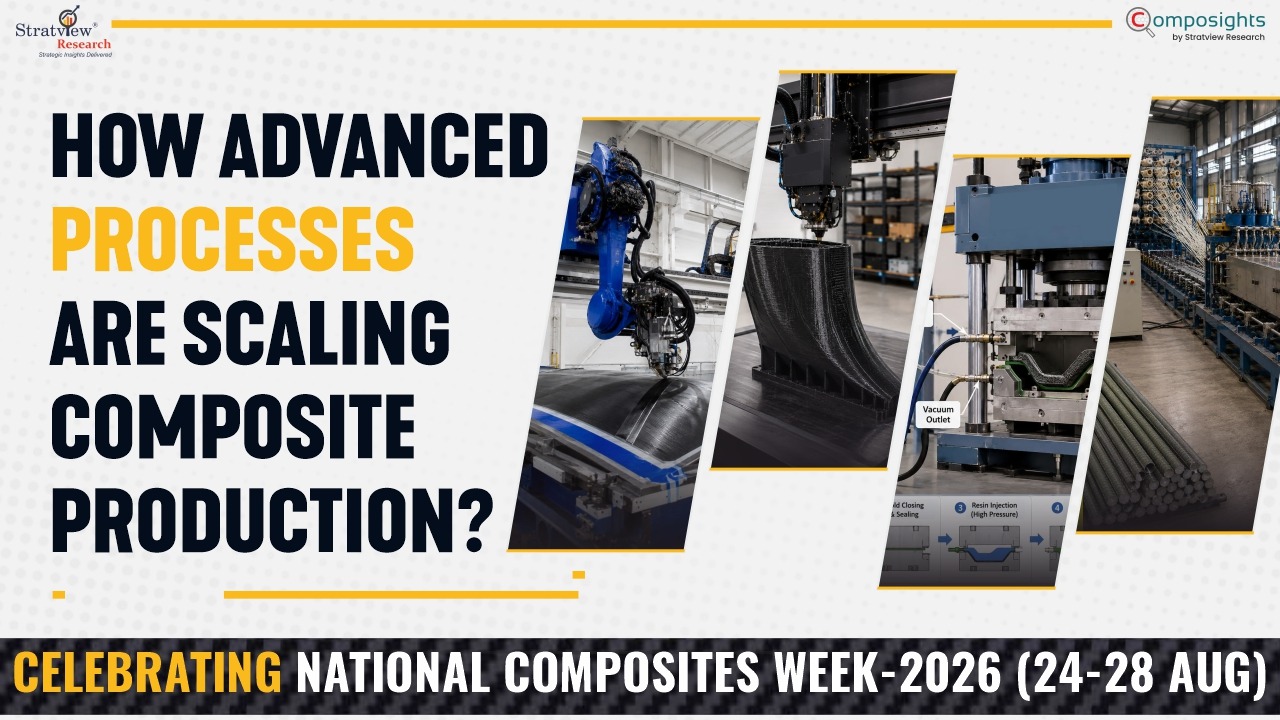
Yesterday, in the first piece of this series, we looked at how processes like AFP, 3D printing, HP-RTM, FiberForm, AMCM, RTS, and pultrusion are being redesigned for speed and throughput. This year's National Composites Week theme, "Composites are Built to Scale," runs through that piece, and it runs through this one too – because a process can only move as fast as the material feeding it allows.
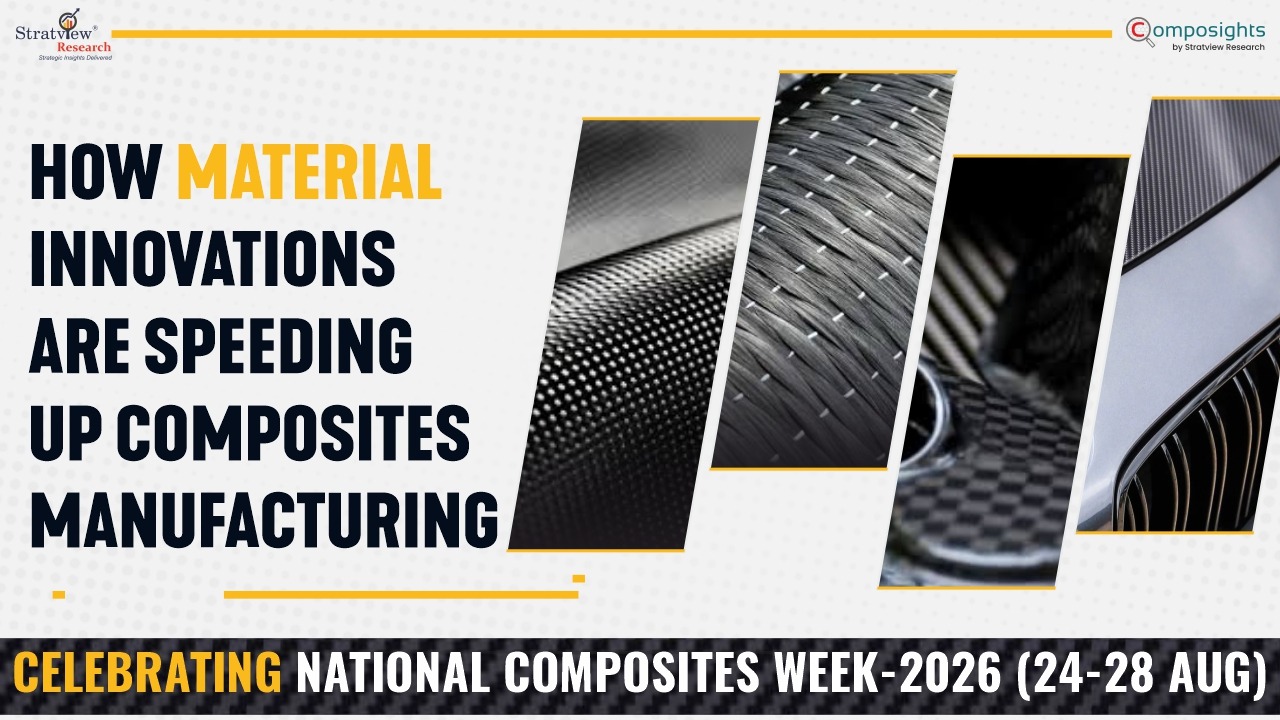
That's the shift underway across material development right now: resins re-engineered to cure in minutes rather than hours, fiber production moving toward continuous automated lines, prepregs and tapes built as robot-ready stock, and materials designed to collapse multiple process steps into one. Rather than surveying every system on the market, it's worth looking closely at a handful of releases where the numbers make the case on their own.
45% Faster Cure, Same Aerospace Qualification Path
Toray's 3960-FC, launched in 2026, is a fast-cure variant of the company's established 3960 prepreg system, cutting cure time by up to 45% versus the standard 3960 autoclave cure. What makes the number matter more is what it doesn't force a trade-off on: the system still supports lower-temperature tooling, VBO processing, and compression molding, and it's targeted at primary aircraft structures, mid- to large-size UAVs, launch vehicles, rockets, and rotorcraft - applications where qualification stakes are highest, and speed gains are hardest to win.
5-Minute Press Cycles, Without Narrowing to One Fiber
Mako's P-2244 HyperCure™ prepreg pushes cure speed further still, with press cycles as short as 5 minutes at 300°F across a broad curing range of 180–350°F (82–177°C). It's built for higher throughput and lower energy costs, and it's available with carbon, aramid, and fiberglass reinforcement - evidence that the push toward minute-scale cure times isn't staying confined to carbon-fiber aerospace work alone.
50%+ Processing-Time Reduction, Demonstrated in Production
Hexcel's HexPly® M51 cures in 40 minutes at 180°C using hot-in/hot-out press molding and is compatible with automated deposition technologies including AFP, ATL, and pick-and-place. The figure that stands out isn't the lab number; it's the field one: in a 2025 fuselage-frame demonstration, Hexcel reported more than a 50% reduction in processing time, a result that starts to look a lot like the process-side gains covered in yesterday's piece, except here the improvement is coming from the material itself.
20% Faster, 20% Lower Emissions -and Already on the Production Line
High-Cycle SMC, a sheet molding compound co-developed by Yamaha Motor, Yamaha Marine, and Japan Composite, cuts molding cycle time by 20% compared with conventional SMC – and because less time in the press means less energy per part, that same shift delivers an estimated 20% reduction in CO₂ emissions from the molding process. It's already in use on powerhead cowlings for Yamaha outboard motors, which makes it one of the few figures here backed by volume production rather than a demonstration part.
The Common Thread
45% shorter cure time. 5-minute press cycles. 50%+ processing-time reduction on a real fuselage part. A 20% cycle-time cut that comes with a 20% emissions cut attached. Different chemistries, different markets, but the direction is the same - cure and process windows that used to be measured in hours are being re-engineered into minutes, without giving up the mechanical performance composites were chosen for in the first place.
Taken together with yesterday's look at processes, a clearer picture forms. Scaling composites was never going to come from process innovation or material innovation alone - it's the two moving in the same direction at the same time that actually shortens the path from part design to production floor.
For an industry aiming to serve applications like EVs, data centers, space, and UAM at genuinely high volume, that alignment between materials and processes may end up mattering just as much as any single performance number.
Do follow our pages @Stratview Research and @Composights for regular interesting content on composites.
Wait for tomorrow to read our next piece in this National Composites Week series.
#NationalCompositesWeek #CompositesBuildToScale #Composites #CompositeMaterials #CompositeManufacturing #AdvancedManufacturing

Samridhi Singh Sisodiya
Associate Content Writer
Samridhi is a content writer passionate about creating impactful digital content for the Mobility and Composites industries. She specializes in writing compelling blogs and social-media content, shaping industry insights into powerful stories that grow brand presence and connect with a broad range of audiences.
Newsletter
Subscribe for regular composites intelligence
The most trusted editorial picks and market signals on composites — straight to your inbox.