Remember the man at the centre of the cover image? He is Oscar Pistorius, also known as the ‘Blade Runner’, and the first double-leg amputee to compete in summer Olympic Games in 2012.
The artificial legs (blades) which made it possible and rendered him speed were made of carbon fibre-reinforced polymer (CFRP). 12 years are passed, and carbon fibre-reinforced polymer (CFRP) prosthetics are now a common-place at various international sporting events.
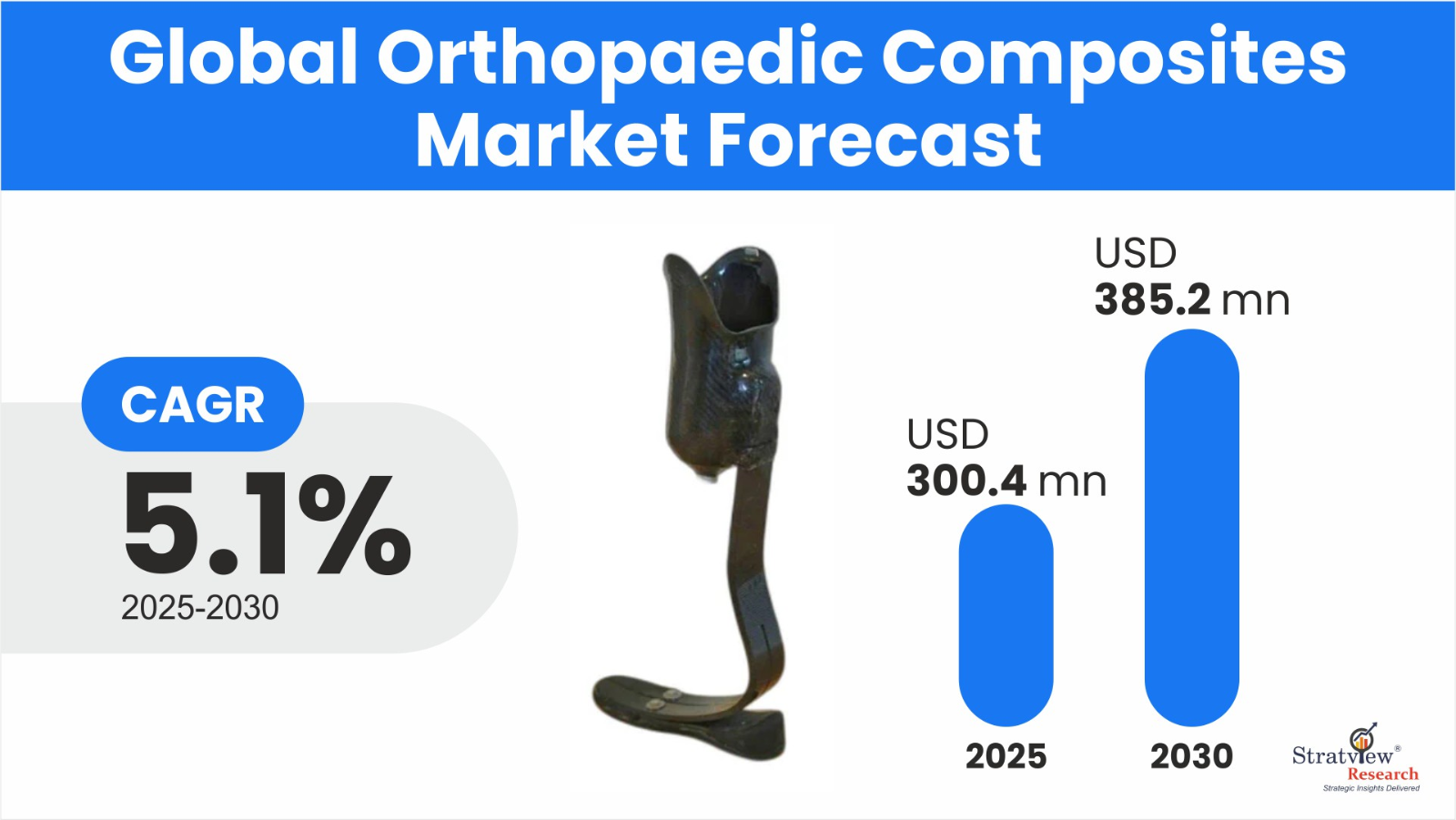
Composites are gaining popularity in modern-day orthopaedics and are used in orthotic and prosthetic manufacturing. According to Stratview Research, the market for orthopaedic composites will reach USD 286 million in 2024. (See Figure 1)
The human bones are themselves composites and are made of both hard and soft materials: calcium and collagen. According to the National Institutes of Health (NIH), bone is the second most frequently transplanted tissue after blood, with over two million transplants performed worldwide every year. Orthopaedic surgeries can trigger immune systems, making it essential for any implant material to function as effectively as natural tissue.
Traditional materials like nickel, chromium, cobalt, and ceramics pose risks of infection since they rapidly degrade in the body’s atmosphere. In fact, the most frequently- used material for orthopaedic implants - Titanium is also prone to hypersensitivity, and in some cases, titanium alloy hypersensitivity has also resulted in failed hip prostheses, cardiac pacemaker implantation, and more. Such failures often necessitate revision surgeries.
To address the challenges posed by metals, their composite counterparts having superior strength and biocompatibility properties, that are capable of safely and gradually degrading in the body within the required healing time, are being used in the orthopaedic industry. The introduction of composite materials in the orthopaedic industry created a buzz addressing various challenges. Let us explore more.
Evolution of Orthopaedic Implants
Needless to say, fractures have existed for as long as humans have, and the use of orthopaedic practices can be traced back to ancient civilizations. Homer, back in 800 BC mentioned in Odyssey - “In Egypt, the men are more skilled in medicine than any of humankind”.
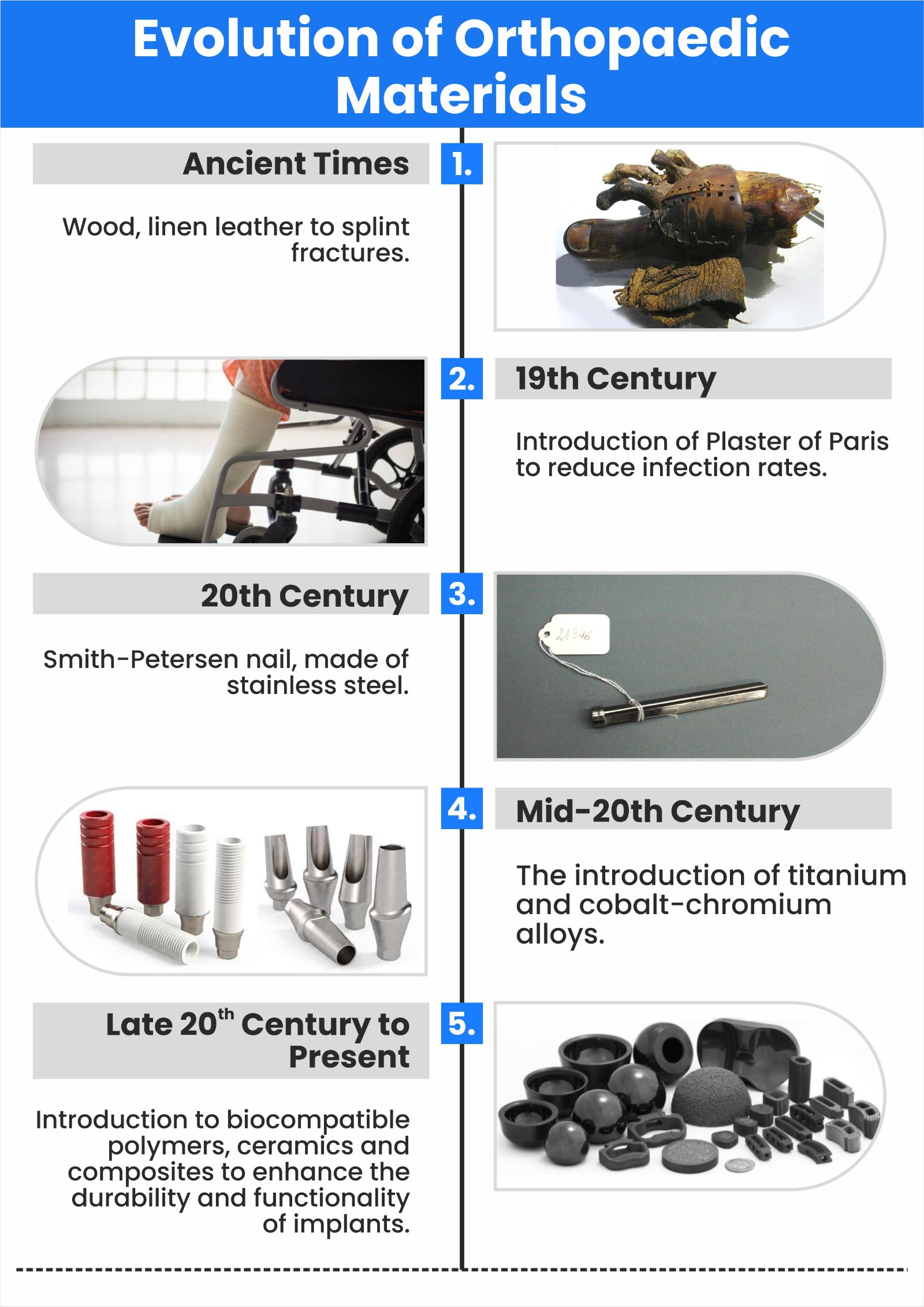
Some Egyptian skeletal remains, mummified bodies, and their paintings depict some of the ancient orthopaedic techniques practiced back then. Wood, linen, or even leather was used to splint fractures but lacked the custom fit required for optimal healing.
In the 19th century, Plaster of Paris was introduced as a material that had the potential to reduce risks of infection. This material was also employed in the treatment of mass casualties in the 1850s during the Crimean War.
The mid-20th century was a period of advancements with the introduction of metallic materials - stainless steel, and cobalt-chrome-based alloys (followed by titanium (Ti) and TI alloys in the 1940s) being introduced for the first time in orthopaedic applications.
However, the first-ever successful substitutive joint prosthesis using stainless steel was the total hip prosthetic by Sir John Charnley in the 1960s. These innovations laid the groundwork for modern orthopaedic implants.
From the late 20th century till present, humankind is witnessing the advent of advanced orthopaedic materials. The development of composite materials has have revolutionized the orthopaedic industry, offering tailored mechanical properties and enhanced biocompatibility mimicking the elasticity and stiffness of natural bone. (See Figure 2)
Innovated imaging techniques, computer-assisted design, and different manufacturing techniques like additive manufacturing, etc. are enabling the creation of highly customized and precise implants.
The Rise of Carbon-Fibre in Orthopaedics
Carbon fibre (CF) is proving to be a game-changer in the dynamic realm of orthopaedic surgery. Different types of composite materials including glass fibre, carbon fibre, polyester, polyamide, PEEK, epoxy, etc. are used in combinations according to the property requirements of the target application. Among these, CFRP has been growing at the fastest pace offering a unique blend of lightweight and high-strength properties.
In the medical field, scientists and engineers often use different types of resins along with carbon fibre, the most common ones are epoxy and polyether ether ketone (PEEK). From braces and splints to artificial limbs, CFRPs have revolutionized orthopaedic applications, enhancing patient mobility, comfort, and overall quality of life.
What Makes Carbon Fibre the Material of Choice in Orthopaedics?
Apart from being lightweight and causing less strain on surrounding tissues and bones, there are numerous properties which makes carbon fibre an ideal candidate for orthopaedic applications. Let’s look into some of those:
Biocompatibility & Chemical Inertness: Carbon fibres do not generate cellular toxicity in in-vitro studies and have excellent moisture and chemical resistance at room temperature reducing the risk of tissue reactions compared to metals. The elastic modulus of carbon fibre is close to that of bone, which gives it an edge over other materials. Carbon fibre has an estimated elastic modulus of 3.5 gigapascals (GPa), cortical bone has an elastic modulus of 12–20 GPa and cancellous bone 1 GPa. By contrast, the elastic modulus of stainless steel is 230 GPa and titanium ranges from 106–155 GPa. Similar elastic modulus helps to lessen stress concentration at bone–implant interface.
Customization: Using composites enables custom-made prosthetics to match the height, weight, and muscular structure of the individual which is impossible using a manufacturing process that involves machining. It is possible to produce complex structures using split dies in combination with resin transfer moulding and prepreg methods.
High Specific Strength & Fatigue Strength: CF-Epoxy composites easily produce a tensile strength of 700 MPa and a modulus of elasticity of 70 GPa. Together with its density of 1.6 g/mL, the material showcases a very high specific strength. CF-PEEK composite demonstrates the ability to withstand high strain loading, up to one million loading cycles, without evidence of failure. Be it a brace for a fractured bone or a prosthetic limb, CFRPs offer the strength and structural integrity needed to ensure optimal performance and longevity.
Radiolucency: Carbon fibre implants have minimal scatter or susceptibility artifacts on magnetic resonance imaging (MRI) and computed tomography (CT), respectively, which offers imaging advantages over titanium implants. This allows for improved post-operative monitoring of bone healing, local disease recurrence or progression, and improved capability for radiation planning.
Variation in mechanical properties: Different regions of a bone have different properties with different collagen, hydroxyapatite, and pore ratios. For instance, the tip of the tibia has 50% higher density and compressive strength. With recent advances in the moulding methods and modern fibre lay-up methods, varying levels of strengths and modulus and varying wall thickness in different parts can be obtained with high accuracy.
The Dominance of Prosthetics in Ortho-Composites
Composite materials are primarily used in the development of:
Implants – Joint replacements, dental drills & braces, splints, fracture fixation devices like plates, screws, etc.
Prosthetics – Artificial arm, lower limb prosthetics, etc.
Orthotics – Special shoe or heel inserts
Amongst various orthopaedic applications, lower limb prosthetics account for >70% of composite material usage. There is a rising demand for prosthetics from the amputees from across the globe.
There are more than 1 million annual limb amputations globally, one every 30 seconds. There are different reasons why amputations occur. Aging and deterioration of bones, accidents, vascular and peripheral arterial diseases, trauma, cancer, etc. are a few common reasons to count. Diabetes - one of the significant causes of amputation, affects millions of individuals globally.
In 2021, according to the International Diabetes Federation (IDF), 537 million adults were living with diabetes across the globe, representing the age group of 20 to 79 years. This number is projected to rise significantly, with estimates indicating that 643 million adults will be affected by 2030, and ~783 million by 2045, translating to nearly 1 in 8 adults. These projections highlight a concerning trend in the global prevalence of diabetes, as well as its associated health risks, including amputations.
While talking about amputations, it is also important to note that the most common type of amputation requiring prosthesis is - Transtibial prosthetics - i.e., below-the-knee prosthesis, which accounts for more than 50% of all prosthetic limbs, state different sources.
Given that below-the-knee prosthesis account for the majority of prosthetic limbs, the primary focus shifts to selecting materials that can effectively support entire body weight while providing maximum comfort and enabling mobility. Carbon fiber composites remain the preferred choice driven by the high demand for lower-limb prosthetics, providing strength more than traditional materials like metals and plastics while being much lighter.
Material Advancement & 10X Growth in Paralympic Athletes
Parasports are a celebration of human strength beyond physical barriers. To achieve greater speeds and agility, orthopaedic composites have been used for a long time.
Paralympic Games have witnessed an incredible rise in number of participants over the years. The count of 400 athletes from 23 countries in 1960 to over 4,400 athletes from 135 countries in 2024 is a testament to the rising interest and level of competition among para-athletes. This growth is mirrored in the evolution of materials used to support para-athletes, from then – wood and steel to now – carbon fibre and other composites.
Companies are actively using composites to bring enormous difference in performance on parathletes. Xiborg is developing cutting-edge prosthetic blades with the help of Toray Carbon Magic with the aim of running faster than the non-disabled athlete.
Honda, a company that claims to have developed the world’s first full-carbon body racing wheelchair, has also developed ‘Kiwami’ model along with Yachiyo Industry. Yachiyo Honda Sun Racing Wheelchairs are their flagship models that used carbon reinforced plastic with an optimal layer design to create ultra-lightweight carbon wheels.
Ultra-long-distance racing wheelchair concept by Andrew Mitchell uses carbon fiber shell and a foam core as the chassis to maximize the efficiency of the wheelchairs for parathletes. The concept also incorporates aluminium, which is again, a lightweight material with good strength-to-weight ratio, for extra-load distribution.
The Reinforcement of Orthopaedic Composites with Industry 4.0
The domain of prosthetics has experienced a renaissance over the past decade. Today prosthetics have taken a big leap and are much ahead in functionality and adaptability than their predecessors. Orthopaedic industry is not left behind in the race to adopt disruptive industry 4.0 technologies including 3d printing, Artificial Intelligence (AI), and Robotics.
Though at an initial stage, the industry is making impressive strides in bringing innovative solutions to put the patients at ease, and the composite materials are the key enablers with their promising properties of lightweighting and high-strength.
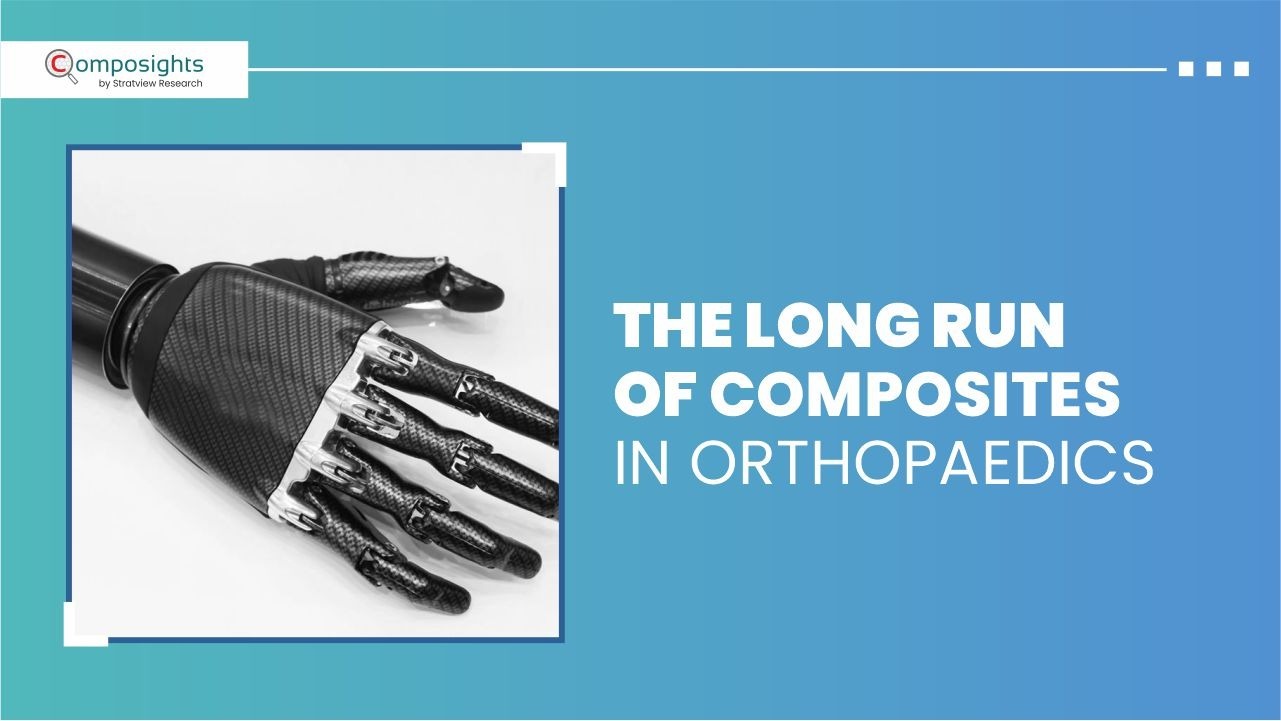
Psyonic’s touch sensing prosthetic hand is one such example. This artificial limb leverages bionic technology with pressure sensors in the fingertips, polymer 3D printing and a carbon fibre composite outer shell for light weight, high strength and high-tech functionality. The prosthetic hand weighs 490 grams and is 20% lighter than an average human hand, thanks to carbon fibre composite socket that fits onto the limb. The socket is custom-built by prosthetics clinicians to fit individual patients. The hand attaches into the socket. The hand components are made in-house by the Psyonic team, including silicone moulding, electronics, tooling manufacturing, composites fabrication, polymer 3D printing and assembly.
One step ahead is the company Atom Limbs which is incorporating AI into its next generation bionic arm. Atom Limbs uses advanced sensors and machine learning to interpret electrical signals from a person's brain that enables mobility and manipulation of the prosthetic limb. The artificial arm is non-invasive and has a full range of human motion in the elbow, wrist, and individual fingers and provides haptic feedback to the wearer on their grip strength.
There are more exciting developments with some cutting-edge prosthetics now venturing into the territory of direct neural interfaces. Acting as a bridge between human and machine, these devices can offer intuitive control allowing the wearers to feel sensations through their prosthetics.
The Future of Orthopaedic Composites
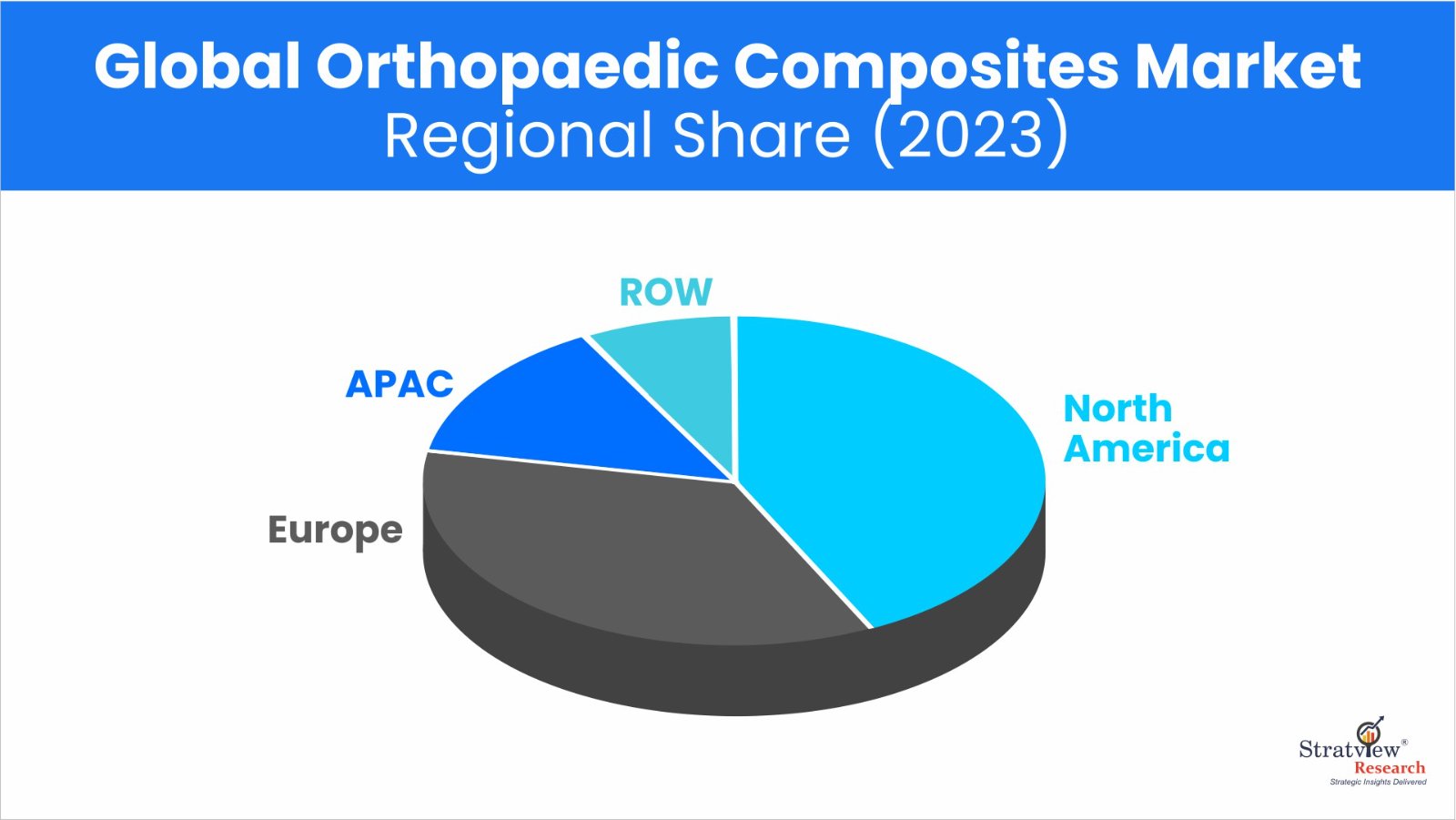
According to Stratview Research, the global market for orthopaedic composites will grow at a strong CAGR of over 5% and is likely to reach USD 385 million by 2030. Over the next five years, North America & Europe together will generate nearly 80% of the total sale of composite materials in the orthopaedics market. (See Figure 3)
Of all the materials, CFRP based prosthetics are expected to witness the highest growth. However, the largest bottlenecks on the way of widescale adoption of composite materials are affordability and accessibility. Today, having a CFRP prosthetic leg is a distant dream for most of the disabled persons.
World Health Organization estimates that 30 million people are in need of prosthetic and orthotic devices and yet more than 75% of developing countries do not have prosthetics orthotics training program in place, often leading to poor clinical coverage of patients.
Also, the composite parts are more expensive due to advanced manufacturing processes as compared to the metal counterparts which are cost-effective, widely available, and are well-understood in the medical community.
Although the composite parts are more expensive initially, their long-term benefits including reduced complications and better patient outcomes make them a valuable investment. Advancement in technologies such as 3D printing is likely to make composites more accessible opening the doors for their wide-scale adoption.
On the other hand, the medical industry will also witness futuristic technologies like neural interfaces, exoskeletons and bionics blurring the line of distinction between humans and machines enabled by lightweight and high-strength composite materials.
Composites for sure, have a long way to go in orthopaedics.
Composights
Editorial
Newsletter
Subscribe for regular composites intelligence
The most trusted editorial picks and market signals on composites — straight to your inbox.