IAAC’s NODE Team Unveils 3D-Printed Autonomous Vessel Asket for Njord 2025
BY Composights
Published: 29 Aug 2025


NODE, a multidisciplinary student team from the Institute
for Advanced Architecture of Catalonia (IAAC), has announced the successful
completion of Asket, its first autonomous surface vessel (ASV), which
will compete in the Njord 2025 Autonomous Ship Championship.
The innovative craft was realized in collaboration with Lam quina s
large-scale 3D printing center in Barcelona. Built with fiberglass-reinforced
PETG using a CEAD E25 pellet extruder on a KUKA robotic arm,
Asket was printed in a single piece in under 10 hours, achieving full
watertightness without postprocessing or assembly.
Measuring 141 cm in length, 67 cm in width, and 28 cm in
height, the vessel incorporates a custom solid infill base to
enhance buoyancy and impact resistance. Structural efficiency is further
optimized through variable wall thickness 7.5 mm at the bottom for
stability and 5.5 mm at the top to reduce weight.
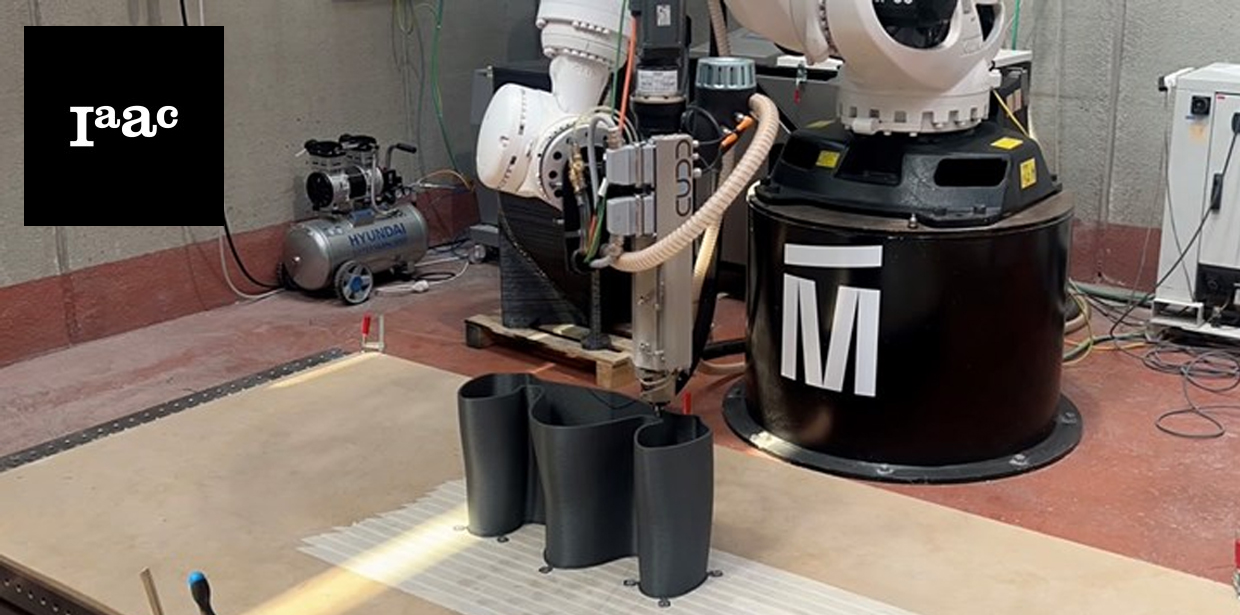
The process leveraged advanced active layer time
management, dynamically adjusting robotic speed and extrusion flow to
maintain consistent thermal conditions, ensuring strong adhesion while
preventing warping or deformation.
With Asket, we are demonstrating how functional, one-piece marine vessels can be created through additive manufacturing, said NODE team representatives. The project underscores the potential of large-scale 3D printing in marine engineering and autonomous systems development.
Source: iaac.net