Zetamotion’s Spectron™ AI Brings Next-Generation Inspection to Complex Composites Manufacturing
BY Composights
Published: 01 Aug 2025


Composites may be the material of the future, lightweight, strong and
capable of performance beyond metals, but inspecting them has long been stuck
in the past. In many production lines, skilled workers still rely on eyesight
and touch to identify defects, a process that is precise yet slow, and
increasingly a bottleneck for manufacturers.
The challenge lies in the material itself. Defects in composites often
hide within fibre weaves, subtle wrinkles, or beneath curved, layered surfaces
that defy standardised inspection methods. Traditional automated vision systems
have struggled here, frequently mistaking natural variations for flaws or
missing genuine defects due to texture, glare, and complex geometries.
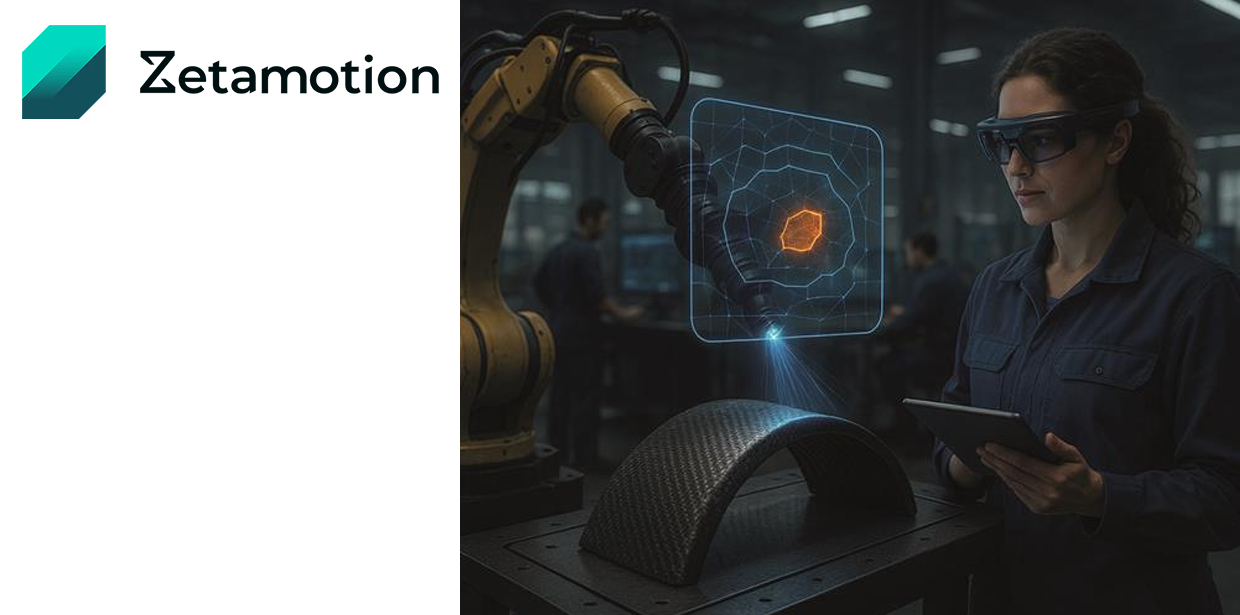
AI That Understands, Not Just Detects
A breakthrough is emerging in the form of Zetamotion s Spectron , an
AI-powered inspection platform designed specifically for composites. Unlike
conventional systems that depend on pre-defined rules or vast defect libraries,
Spectron uses semantic learning to understand the principles behind a part s
design and defect patterns.
The system generates curated synthetic training data from a single scan,
eliminating the need for extensive manual data labelling. This allows Spectron
to adapt to each unique part, distinguishing between acceptable variation and
true defects, even when surfaces are non-uniform or inherently imperfect.
Source: zetamotion.com