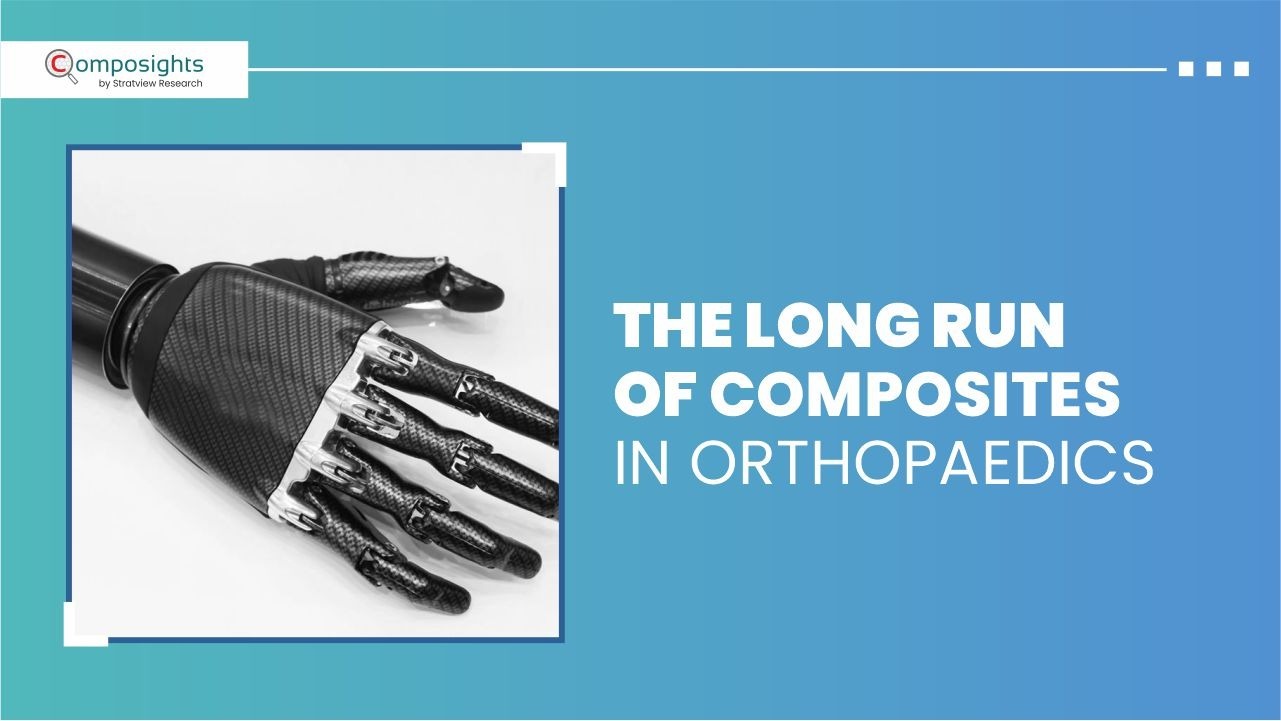
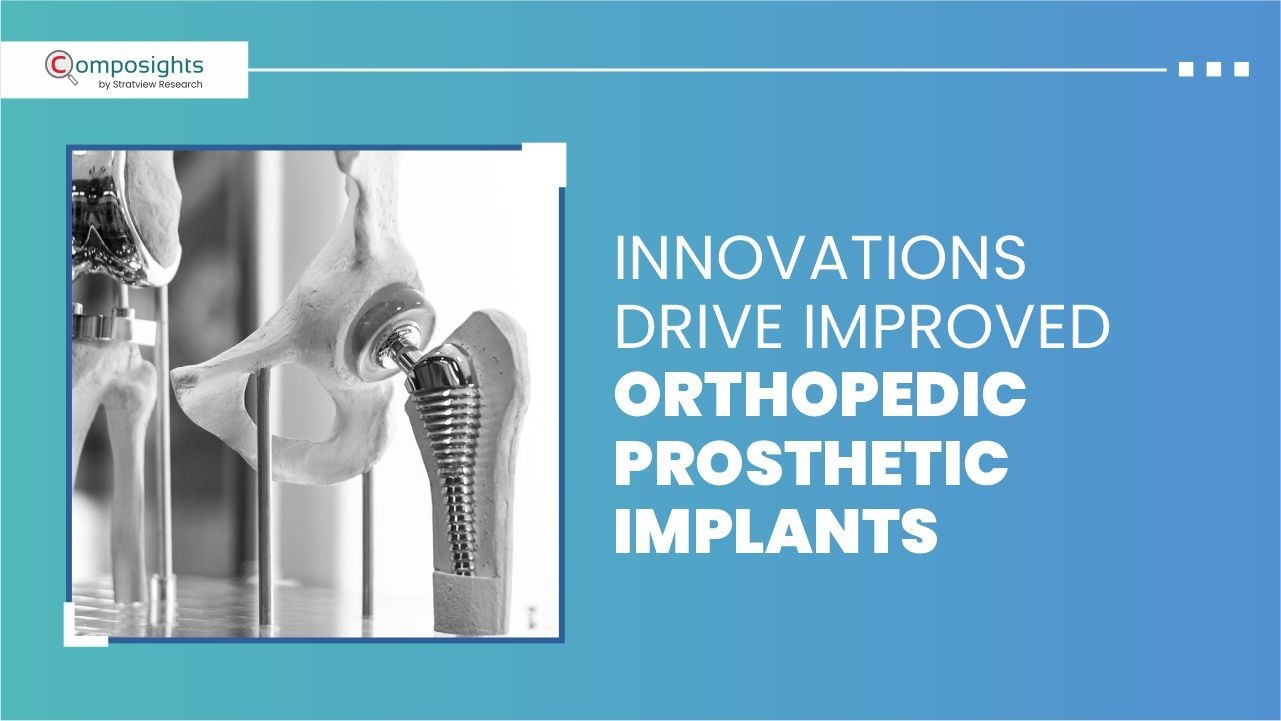
The first ever bone plate that was implanted in a human body is reported to be in the 1560s, centuries before the advent of anesthesia. Since then, there has been no looking back in the implants sector, and further upgrades in medical inventions have led the way to the development of orthopedic prosthetic implants.
Orthopedic prosthetic implants are utilized either to replace a damaged body part enabling proper functioning with improved strength, or to make an available fixation point of bone to hold the implant.
Each year, more than 500,000 patients globally suffer a spinal cord injury for reasons ranging from sports-related trauma and road accidents to increasing incidences of spondylolisthesis and disc degenerative conditions, and more, according to the National Center for Biotechnology Information. These incidents lead to severe health conditions, and in some cases, a patient can even be confined to a wheelchair. In many cases, orthopedic prosthetic implants can enable such patients to get regain their mobility.
Artificial limbs, spinal fusion, joint replacement, and plates and screws are a few orthopedic prosthetic implants in use today. Although these implants don’t create a new life, they surely improve the quality of life, allowing patients to live without the discomfort that chronic pain, deformities, or injuries bring.
Types of Prosthetic Implants and their Uses
Orthopedic implants can be permanent, such as replacements of knees, ankles, shoulders, and hips, or temporary, such as screws, pins, and plates, which are used for inserting and fixing implants in the correct position of the body. The most common types of orthopedic prosthetic implants are screws, plates, and prostheses.
Screws. They look similar to the ones found at any hardware store and also serve the same purpose. The screws used during implant surgeries tighten the damaged areas, produce compression, and repair a fractured bone.
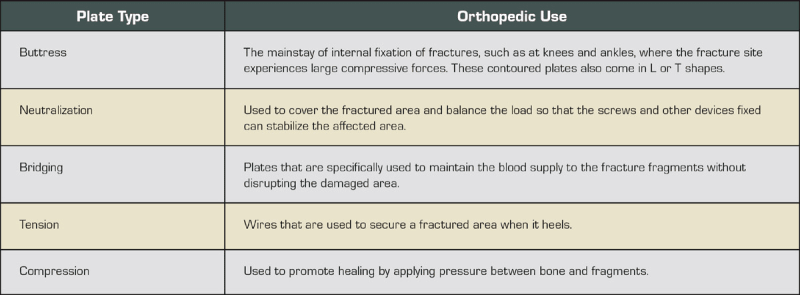
Plates. In the 1880s, orthopedic plates were used to fix long bone fractures, and since then, these plates have been and remain a successful treatment for fractures or reconstruction. Plates should have a proper thickness, width, and length to hold and support both sides of the fractured bones. There are five basic types of orthopedic plates (see Table 1).
Prostheses. Artificial body parts that are used to replace affected areas are counted under prostheses. In some cases, prosthetic materials added with a healthy bone are used to replace any spoiled or damaged bone.
What are these Implants Made of?
As these parts are meant to be a part of the human body, there are a lot of things on the priority list, when choosing the correct material while manufacturing these implants. Keeping in mind the purpose the implants are supposed to solve, the materials chosen are always chemically inert, biocompatible, offer great strength, and are generally lightweight. Orthopedic prosthetic implants are mostly made of materials such as metals, polymers, and ceramics.
In metals, most implants are made of stainless steel or titanium alloys. Titanium is widely used as it is lighter than steel and lasts longer. In the medical industry, titanium is also used to make surgical devices such as scissors, forceps, tweezers, laser electrodes, and more.
Polymers, chemically processed and linked monomers, are also used in orthopedics sector. Some examples of polymer biomaterials suitable for orthopedics include silicone rubber, polyethylene (PE), acrylic resins, polyurethanes, polypropylene (PP), and polymethylmethacrylate (PMMA). PMMA provides exceptional primary fixation of the prosthesis.
Ceramics, due to their physiochemical properties, are used in numerous medical applications. Their hardness and density make them useful for bones and teeth replacement, but they become weak under pressure. Calcium phosphate ceramics are commonly used ceramics in orthopedics. The use of advanced ceramic materials such as zirconium oxide and silicon oxide are gaining traction.
The Growing Orthopedic Prosthetics Implants Sector
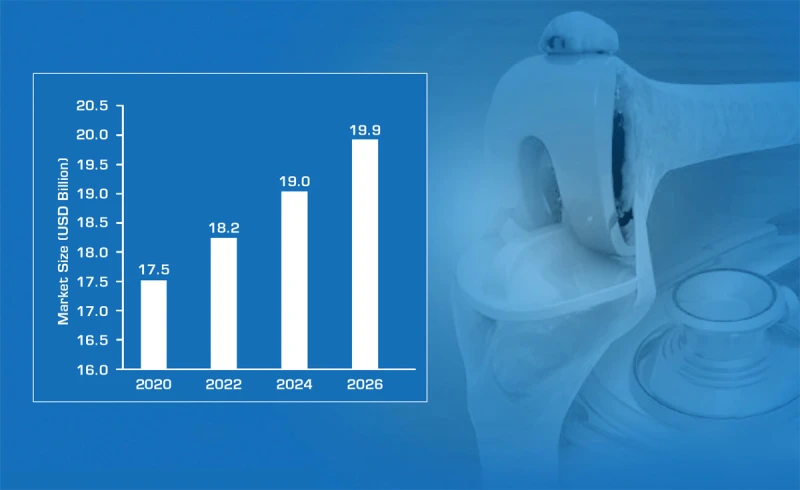
Orthopedic prosthetics implants are emerging as a clinically promising treatment option for a growing number of conditions to better match an individual’s anatomy. As a result, the global orthopedic prosthetic implants market is rising rapidly.
The market size of orthopedic prosthetics implants is expected to reach about $20 billion by 2026, which accounted for about $17.5 billion in 2020. Figure 1 represents the market size of the orthopedic prosthetics implants market globally.
One of the reasons behind the growing demand for orthopedic prostheses and prosthetic implants is the rising geriatric population across the globe. Aging comes with health issues that often include orthopedic and degenerative joint conditions such as osteoarthritis, osteoporosis, low bone density, etc. It drives the need for more and more orthopedic prosthetics implants.
The United Nations’ World Population Prospects 2022 estimated that the total share of the geriatric population is projected to rise from 10 percent of the total population (~8 billion until Nov. 15, 2022) in 2022 to 16 percent (9.7 billion) in 2050.
Additionally, growing cases of trauma-related medical emergencies, such as spinal implants (including both spinal fusion and nonfusion surgeries), road-accident cases, and sporting mishaps have also heightened the demand for orthopedic prosthetic implants.
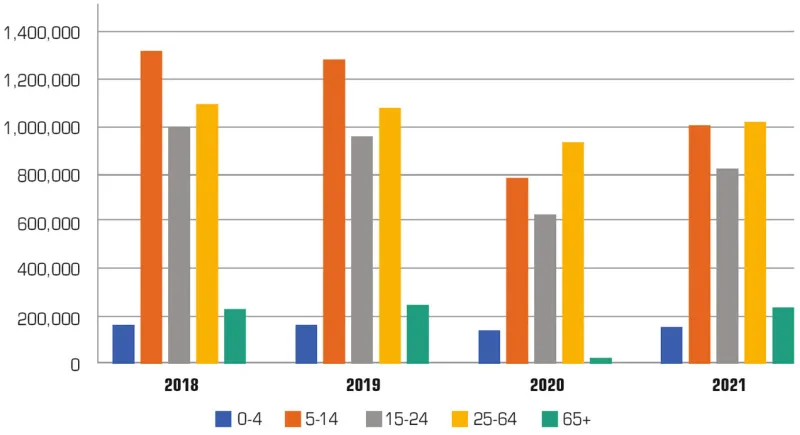
The numbers show that, in the United States, the count of patients treated in emergency departments for injuries involving sports and recreational equipment has been growing rapidly. Sports and recreational injuries reported in 2020 in the United States, increased by 20 percent in 2021. In 2021, 3.2 million people were treated in emergency departments for such injuries (see Figure 2).
Emerging Technologies to Meet the Increasing Demand
It has been a challenge for prosthetists to replicate the inherent body parts’ intuitive motor control, light touch sensation, and coordination in a way that accurately depicts the complexity of its native structure and function. Innovative new technologies — from 3D printing to thought-controlled devices — are being developed to help meet the requirements.
3D Printing. 3D printing has changed the face of orthopedics. It has enabled printable prosthetics that can be fully customized. For instance, this technology has transformed the design and fabrication of ankle-foot orthoses (AFOs). Traditionally, AFOs have been produced by using plaster casts, which is a time-and money-consuming process. By contrast, 3D printing has offered an easy, fast, and lower cost alternative for this application. Moreover, a 3D printed AFO is superior in fit, comfort, and overall design and appearance.
Sensor-Enabled Technology. Recent advances in wireless sensors are promising new and unexplored opportunities in the orthopedic implants sector. Smart sensor-enabled prosthetics with sensory feedback offer a sensation of flexing and landing the legs, giving the user the ability to walk quickly and comfortably.
Myoelectric Prostheses. Electrically powered prostheses, also known as myoelectric prostheses, are a significant advance to recovering a lost limb function of amputees. Powered by motors and batteries onboard, these prostheses are monitored by inputs from electrical signals generated by muscles. However, more than 25 percent of total amputees reject this prosthesis because it lacks sensory feedback. Recent advancements also allow these prostheses to capture feedback more efficiently. For instance, a myoelectric arm prosthesis is designed with wrist position feedback.
Haptics Technology. Adding movement by replacing a damaged body part is possible due to the use of a prosthesis, and adding sense to that movement is possible with haptics technology. Haptics helps in restoring the sense of touch by relaying force, pressure, and slip measurements to the user.
Prostheses Controlled by Thoughts. To control a limb just by thoughts is now possible with the advanced prostheses that use muscle grafts to amplify the signals. These new devices perform with >90 percent accuracy.
Moving Ahead
Mobility is one of the fundamental requirements for any human. Accidents can be avoided, but conditions such as inflammatory diseases, degeneration of bones, and the many bone issues that come with aging are inevitable. It is quite clear that in the coming years, the population using prostheses will continue to rise.
OEMs and prosthetists are moving toward achieving the goal of even better-performing prostheses implants with improved sensory capabilities to match the lifelikeness of the prostheses. Groundbreaking innovations are improving orthopedic implants and enabling customization of prostheses. These innovations will continue to merge with emerging cutting-edge technologies in the future, which foretells the arrival of some promising developments for orthopedic prosthetics.
Authored by Stratview Research, Published in Medical Design Briefs
Composights
Editorial
Newsletter
Subscribe for regular composites intelligence
The most trusted editorial picks and market signals on composites — straight to your inbox.