The Bottleneck That Would Not Go Away
If you have worked in composites long enough, you know exactly what the tooling procurement cycle looks like. An engineer raises a requirement. A procurement manager takes it to a supplier. The supplier needs time to put a quote together. There are follow-up questions. By the time a number lands on the procurement manager's desk, weeks have passed. Jamie Snudden, Director of Sales at Plyable, describes the pattern plainly: "Buying composite tooling was always a very slow process, always the bottleneck. You had a very traditional procurement approach where procurement managers are told by engineers what they need, then go to a tooling company, the tooling company puts a quote together, that goes back, there's a round of questions..."
Plyable was founded seven years ago with a straightforward ambition: give people their answer without the wait.
What Plyable Does
The founding proposition was built around AI. As Snudden explains it, "the founders saw an opportunity to say: we can use this AI technology, we can develop a costing algorithm which just gives you your answer straightaway." Upload the CAD file of the part, specify your material, process, and tooling preferences, and the platform returns a price, a lead time, and a preliminary mould design within minutes.
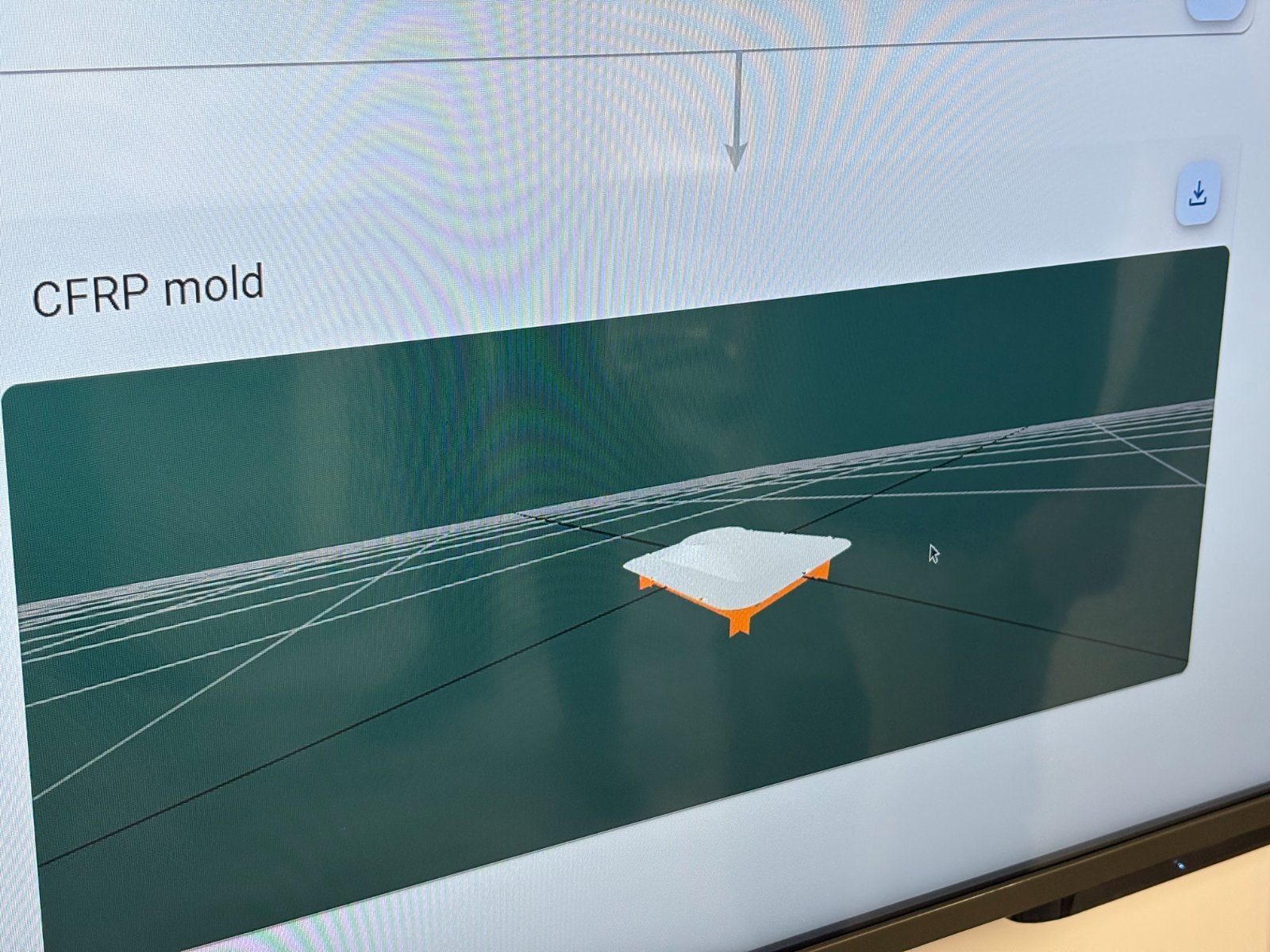
The AI costing & tooling design generation capability tends to lead the conversation, and understandably so. But that is just the starting point, not the full picture. Snudden speaks from experience. "I've been in development projects where you've got the process, you've got the tech, you've got the material, but then actually having a tool that will do the job.” Snudden explains where the real value lies: "Although the AI is quite a good selling point, the key benefits are that we're a turnkey solution. We offer all the project management, and we do the quality management. It is as easy as placing an order online, and your tool turns up."
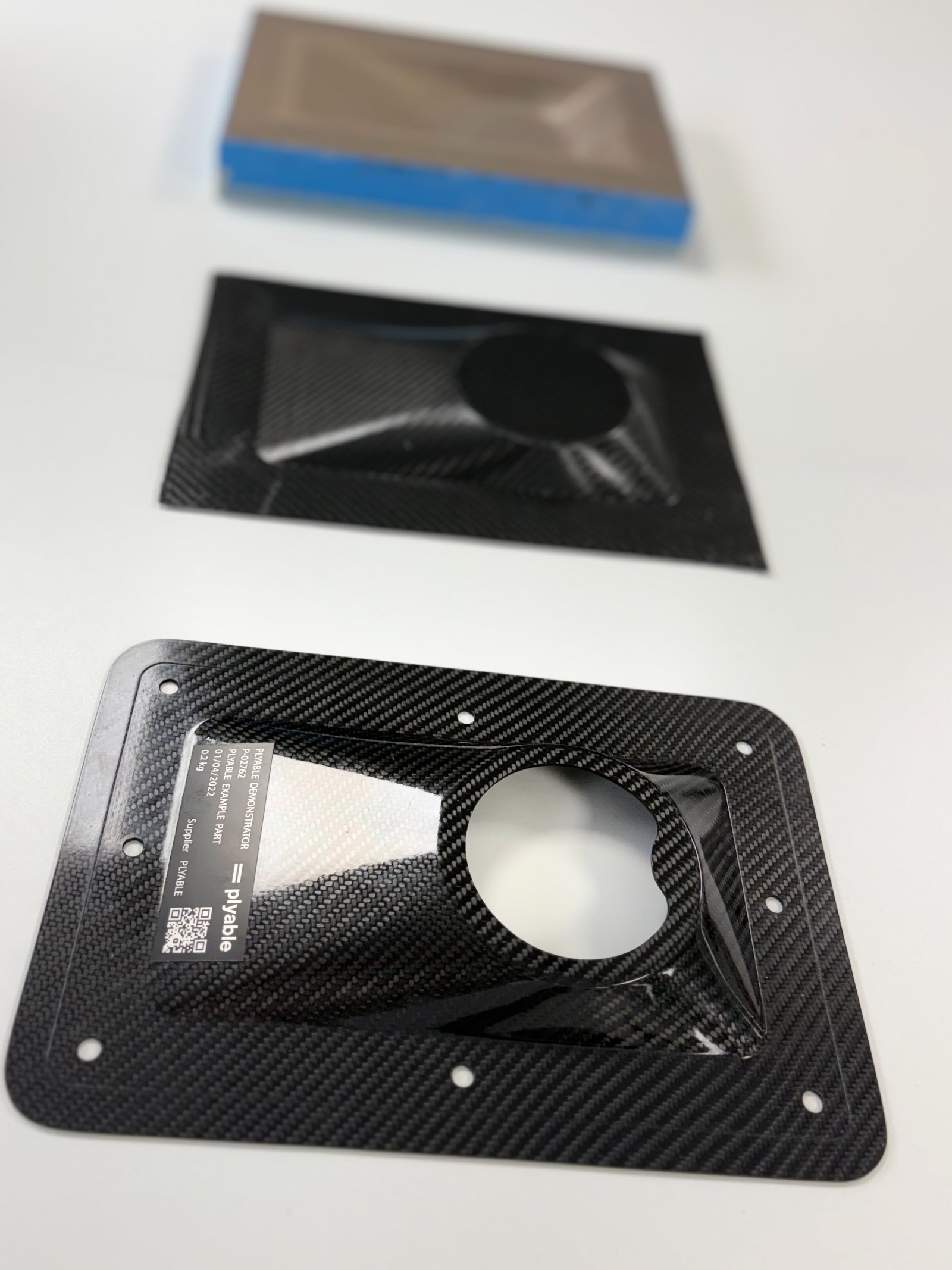
Once a customer accepts a quote and chooses to hand the project over, Plyable owns the entire delivery chain from that point forward. While the AI may handle the majority of the initial design, Plyable's in-house tooling engineers always review and complete the job. They check for accuracy, identify where additional technologies such as cure sensors may be needed, and ensure the tooling design is production-ready before anything moves to manufacture.
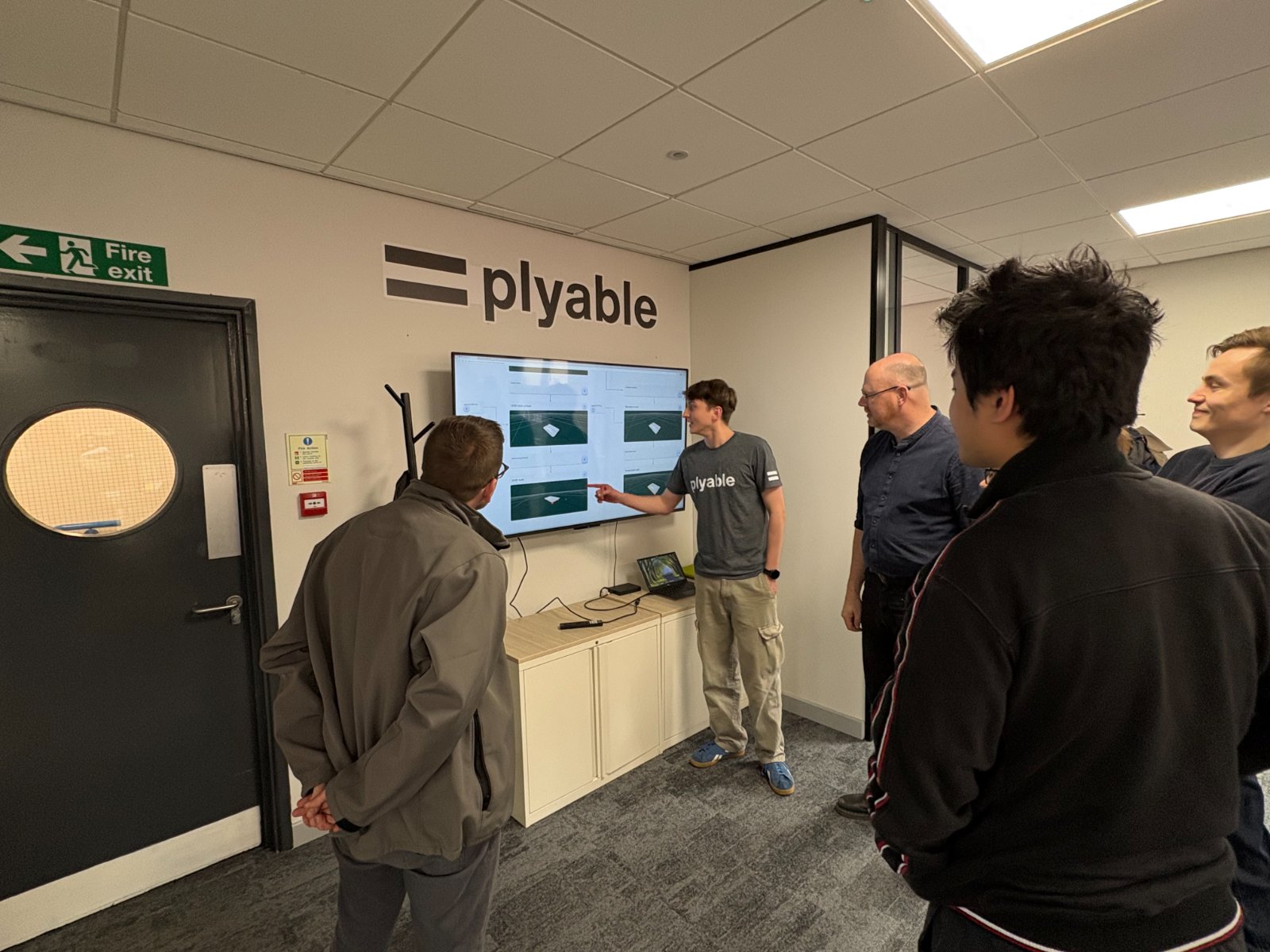
From there, Plyable routes the job through a global network of audited suppliers, matched to the specific tooling type, complexity, and timeline. Its own supply chain team monitors quality at each stage, and every finished tool goes through final inspection before reaching the customer. For more complex builds requiring technology integration, Plyable's engineers work on-site with the tooling manufacturers to completion.
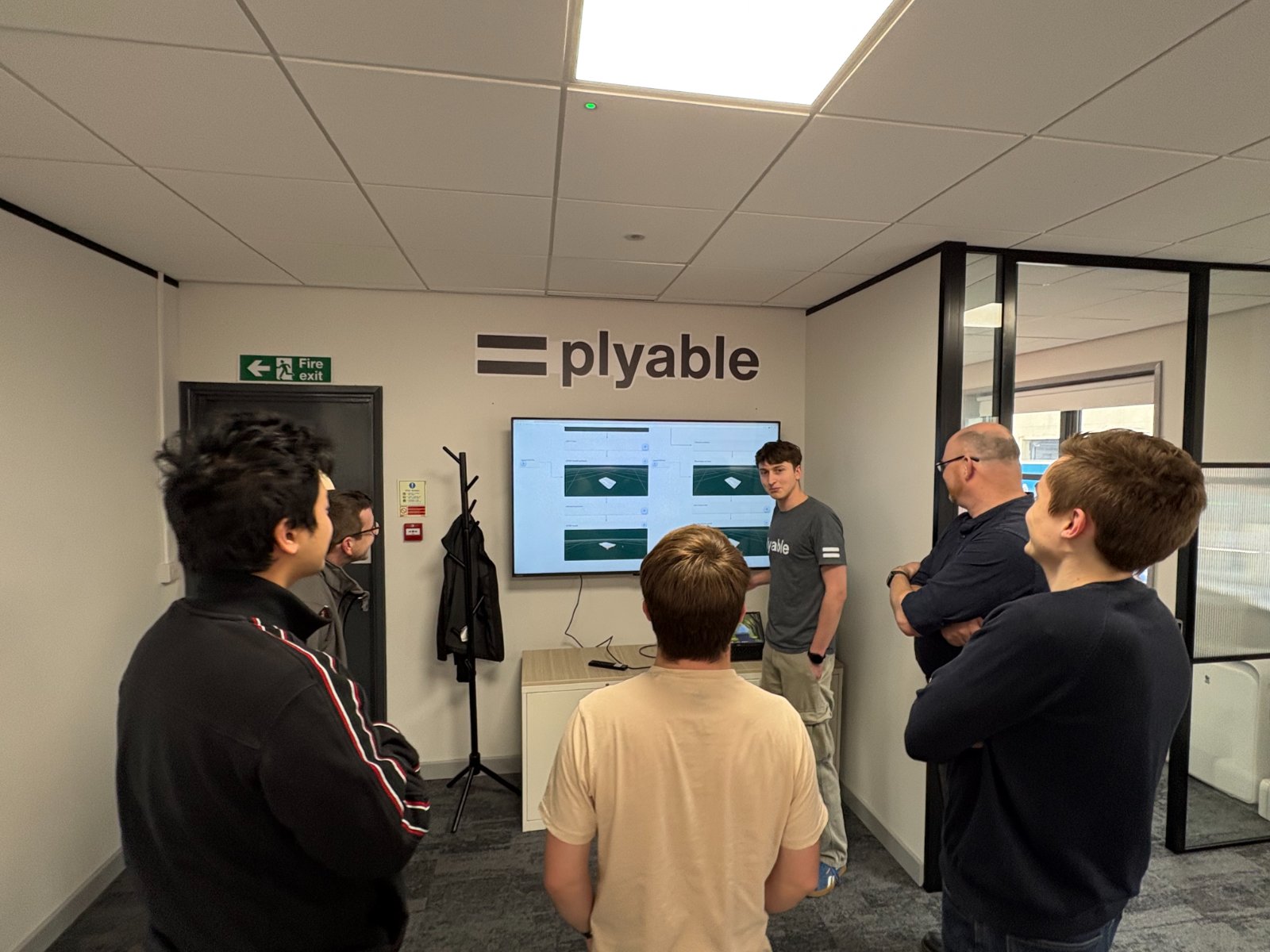
Interestingly, Snudden also emphasises the organisational structure that makes this work efficient. "The quality guy sits next to the tooling engineer, who sits next to the project manager. So instead of having different departments, different teams across the world, it's all done in one place." It is straightforward in principle, but most companies simply never manage to achieve it in practice.
The results are measurable. In one programme involving a three-metre aerospace component for a Tier 1 supplier, Plyable delivered the tool 40% faster and at 20% lower cost than the conventional route. That outcome was not driven by cheaper inputs but entirely by structural efficiency.
"We were 40% quicker on timescales and 20% cheaper on cost, and this was for a decent-sized aerospace part." — Jamie Snudden, Director of Sales, Plyable
However, it is also worth noting, as Snudden does without any prompting, that Plyable is not always the cheapest option. "I'd be lying if I said we're cheaper all the time." For simpler tools with an existing supplier relationship, Plyable's margin adds cost. What it buys in return is the elimination of programme management overhead, a calculation that tends to favour the customer as programme complexity increases.
And naturally, this proposition of convenience applies to tooling requirements beyond composites as well. "We do metals," Snudden says, "and in fact we're going to push later on in the year, push into the metals market more. And we do reinforced plastics as well; we can help with thermoforming." What began as a composites-first platform is looking to widen its reach across adjacent manufacturing domains.
Closing the Technology Gap
Though solving procurement speed was the company’s founding ambition, the company has also identified another problem in the industry, and it is the one that is now grabbing Plyable's attention.
The composite tooling market has no shortage of emerging technologies, from heating solutions, cure monitoring systems to novel tooling board materials. Developers building these products often have something genuinely useful but no clear path to the manufacturers who need them. Meanwhile, those manufacturers are working to tight timelines and rarely have the bandwidth to go searching. Promising technology sits on the shelf while programmes continue running on older approaches, simply because no one made the connection.
Plyable's answer is to become, as Snudden puts it, "that hub of the ecosystem, using our position in the market to link tooling technology developers with end customers." The model runs in both directions: technology developers gain access to a customer base they could not otherwise reach, and those customers gain access to tooling capabilities they would never have found on their own. "Say you're developing a heating solution or a cure monitoring solution or a new type of tooling board, but you have no route to market — we can provide that," says Snudden. Simply, Plyable is positioning itself as the connective tissue of the composite tooling ecosystem.
Tangible: Building for Both Sides
So far, we've looked at the buyer's side of things, but manufacturers have their own set of problems. Every enquiry they get means going through a tedious process before finalising a quote that can take days or even weeks. Plyable's answer to this problem is ‘Tangible’. It's a standalone SaaS product launching soon and uses the same core AI engine, but for a different type of customer. While Plyable is for the buyers of tooling, Tangible is designed for the companies that actually make the tools.
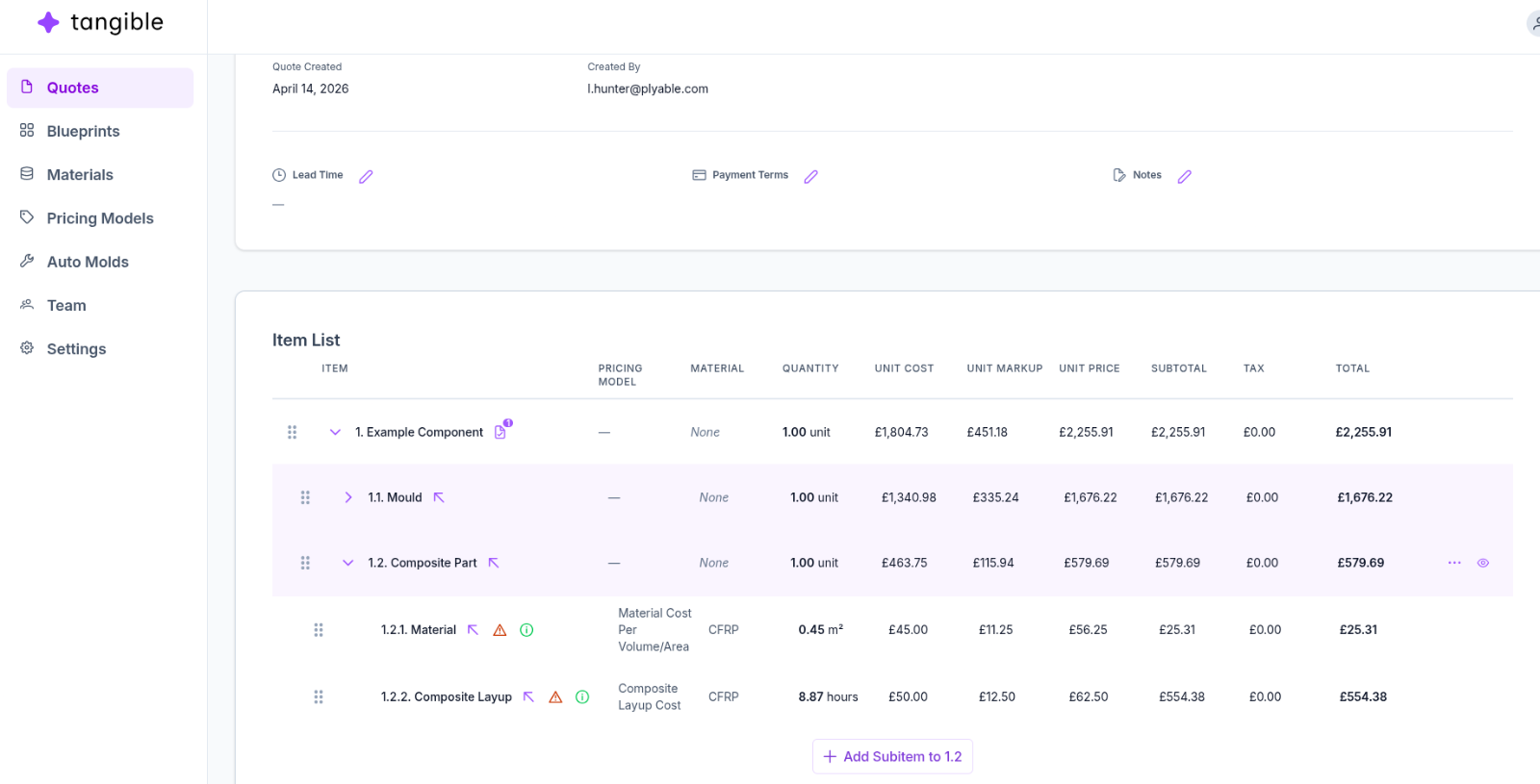
The output is different from Plyable's quoting tool. Tangible gives the tooling manufacturer a build breakdown: hours required, equipment needed, and material quantities. From that, Snudden explains, "the company using the software can then build their own quote to feed into their own processes." What might have taken days of estimating gets done in minutes.
The overhead Tangible targets are the kind that are easy to underestimate. "Instead of having an estimator, a sales engineer, a procurement manager, and people to sign off, it's taking all of that work and in minutes you'll have a formal quote that you can send to a customer instead of spending days or weeks on it."
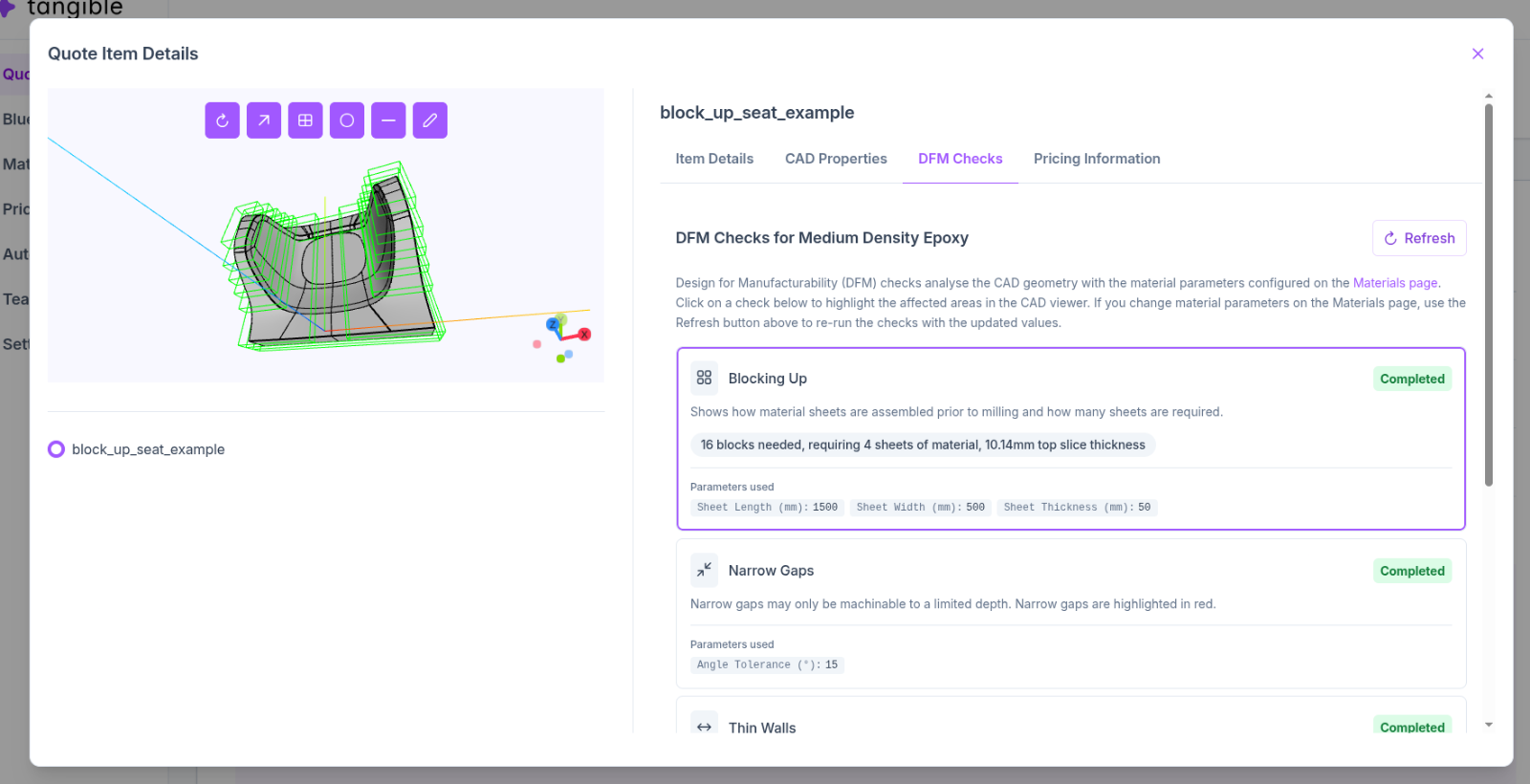
For a tooling manufacturer writing forty quotes a month, Plyable's modelling puts the saving at roughly £20,000 in monthly estimating overhead.
"It's targeting the hidden overheads: the admin time, the opportunities you lose because a competitor already quoted while you were still writing yours." — Jamie Snudden, Director of Sales, Plyable
Where This Is All Heading
Ask Snudden about the ten-year picture, and the answer comes quickly. "I see Plyable as a global, almost-franchise where we'll have people in India, in the US, in Australia, in Europe, where you have suppliers and customers all in the same place. The go-to people for composite tooling." At the same time, Tangible is likely to come up as a separate business as more people start using it.
On the technology development side, the near-term priorities are more detailed auto-mould generation, broader geometric coverage, and an AI-assisted CAD interface that supports engineers in real time. Not replacing the tooling engineer, but raising the floor of what every engineer on the platform can do.
Snudden's summary of Plyable's current position is characteristically concise: "We're quick, but the industry's slow." The composites sector takes its time with new approaches. However, Pliable is doing the quiet, consistent work of building infrastructure that the industry will increasingly rely on.
For CXOs managing complex tooling programmes and looking for a partner that can operate at the intersection of speed, quality, and technology integration, Plyable is a company worth paying attention to.

Vyapak Tiwari
Editor, Composights
Vyapak is a content marketing professional with a passion for exploring and explaining the latest developments in Mobility & Composites space. He has contributed to numerous articles, market briefings, and thought leadership reports, offering insightful perspectives. His expertise and in-depth knowledge have been recognized and published in various renowned platforms across the world.
Newsletter
Subscribe for regular composites intelligence
The most trusted editorial picks and market signals on composites — straight to your inbox.