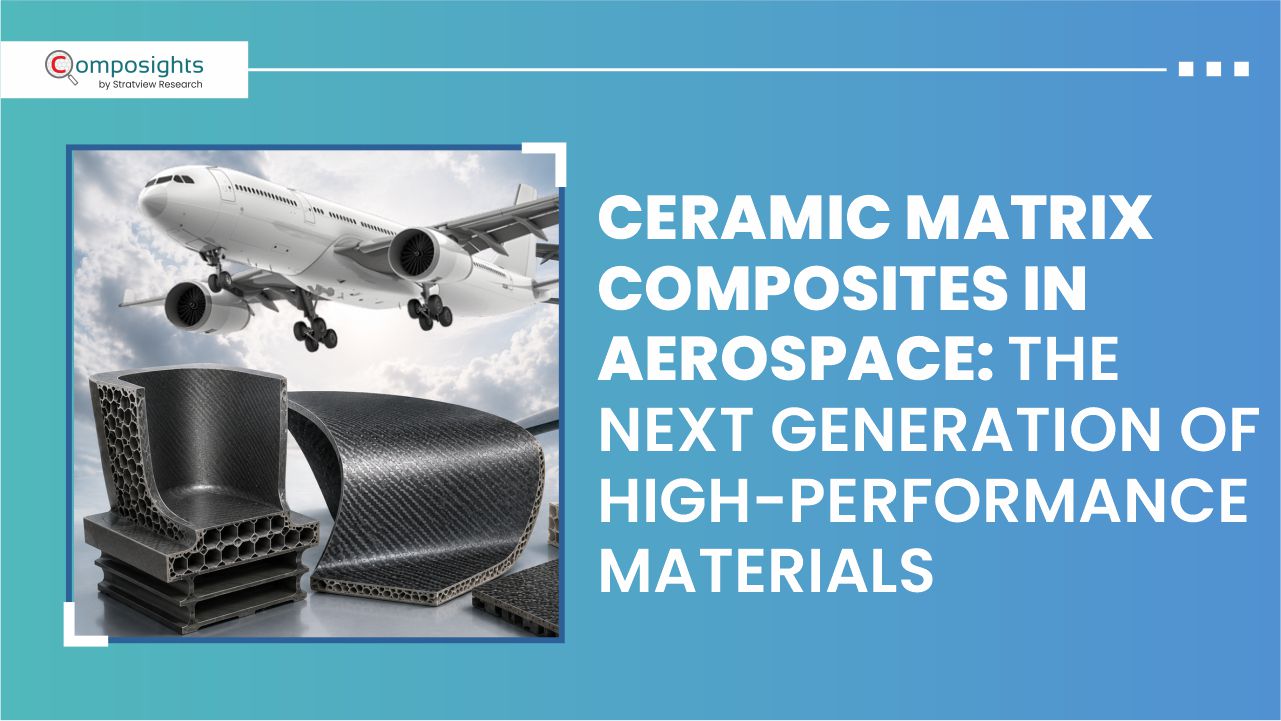
For aircraft engines, the CMCs are mostly of silicon carbide (SiC) fibers within a SiC matrix (around 85% of the CMC market is captured by this material combination). These CMCs are replacing traditional materials like nickel or titanium alloys due to several benefits.
The Kilauea volcano in Hawaii is said to be the hottest active volcano in the world, with lava temperatures reaching up to 1,250 °C in the lava tubes. However, did you know that some parts of the modern jet engines get 60% hotter (~2,000°C) than the Kilauea volcano? Under such operating conditions, the material for 40,000 parts that constitute an aircraft engine must be chosen judiciously. In this picture, Ceramic Matrix Composites (CMCs) have emerged as a novel alternative to existing materials like nickel alloys.
Understanding the CMCs
Composites are made up of two kinds of materials: the primary material that provides mechanical properties (reinforcement/refractory fibers) and the material that binds everything together (matrix material). The composites with ceramic reinforcement and matrix material are known as Ceramic Matrix Composites.
For aircraft engines, the CMCs are mostly of silicon carbide (SiC) fibers within a SiC matrix (around 85% of the CMC market is captured by this material combination). These CMCs are replacing traditional materials like nickel or titanium alloys due to several benefits. To start with, the density of CMC parts is approximated to be at least 1/3rd of their metal counterparts. Furthermore, CMCs can operate at temperatures 200 to 300 °C higher than their metal counterparts. This thermal capability also implies there is a decreased need for air cooling, further improving engine performance and fuel economy. Above all, CMCs provide superior strength, rendering them a perfect option for substituting heavy metals in large engines without sacrificing mechanical properties.
|
Parameter |
Nickel Alloy (Inconel 600) |
CMC (C/SiC) |
|
Density |
~ 8.43 g/cc |
~ 1.9 g/cc |
|
Heat Resistance |
~ 1,000 °C |
~ 1,300 °C |
|
Tensile Strength |
75-220 ksi |
250 ksi |
Table: Comparison of characteristics between Inconel 600 (Nickel Alloy) and C/SiC CMCs
Density and the Mathematical Magic
From removing a single olive weighing about a gram or two (American Airlines),
making the glassware thinner (Virgin Atlantic), printing the in-flight
magazines on thinner paper (British Airways), to asking the passengers to visit
the lavatory before boarding (All Nippon Airways), are some of the weight
reduction ideas you might find amusing to read about. However, it's amazing to
know that the single olive saved USD 55,000, Virgin Atlantic’s thinner
glassware saved 53,000 litres of jet fuel, and the thinner magazines saved USD
417,000 for British Airways annually. These examples depict how even an extra
gram taking off the ground translates into a hole in the airline’s pocket. This
math makes the manufacturers continuously look for lighter materials to fit
into the giant aircraft powerhouses. CMC components that are produced with the
same volume and design as alloy engine parts weigh much less due to their lower
densities (shown in the table above). As a result, manufacturers are gradually
embracing CMCs, considering their potential to transform engine performance and
efficiency.
Applications
The significant use of Ceramic Matrix Composites in an aircraft engine began in 2016, when CFM International incorporated turbine shrouds made up of CMC in their LEAP engine. Today, CMCs are used in different aviation engines, such as those on commercial and military planes, private jets, and helicopters.
CMCs are utilized to manufacture critical
components in aircraft engines. Shroud, the structure that encases the turbine
blades, makes the engine aerodynamically efficient, and shields turbine parts
from high temperatures, dominates this market with about 35% market share.
Close behind are the nozzles, which transform the heat energy from the exhaust
gases into kinetic energy, creating propulsion, making up approximately 30% of
the market. Turbine blades and combustor liners are another set of essential
parts in an aircraft engine. The turbine blades harness energy from
high-temperature gases and convert it into mechanical work, while combustor
liners maintain a controlled environment for combustion. These two together
constitute about 28% of the market, with other miscellaneous applications
occupying the remaining market share.
Towards a lighter-stronger future
Engines like CFM's LEAP, GE's Passport 20, and GE9X have incorporated Ceramic Matrix Composites (CMCs), significantly improving fuel efficiency. The Airbus A320neo, equipped with the CFM LEAP engine, has a 20% increase in fuel efficiency compared to the previous model, the A320. This, in turn, has resulted in a 14% decrease in operating expenses per seat for the airlines, making it a popular choice. As of September 2024, a total of 10,806 orders have been placed for the A320neo, with 3,559 deliveries made since its introduction in 2010. Within a decade of its inaugural flight in 2014, the A320neo captured around 60% market share in the narrowbody aircraft category. Moreover, the popularity of other aircraft such as the Boeing 777X (deliveries to begin in 2025) and the Bombardier Global 7000, in addition to the A320neo, suggests an illuminated future for the CMCs.
The market size of CMCs in aircraft engines was USD 10.6 billion in 2023 and is expected to climb to USD 11.8 billion by 2024. The market is expected to hit USD 18 billion by 2028, driven by a CAGR of around 11% (according to Stratview Research).
The industry trend towards CMCs indicates that manufacturers are looking for new ways to improve fuel efficiency and lower the weight of aircraft. By substituting nickel and titanium alloys with CMCs, the aviation industry can experience notable enhancements in both engine performance and thermal regulation. With the increasing popularity of these innovative materials, aircraft design is on track to undergo a sustainable and efficient revolution.
Subscribe to our newsletter
Related Articles:

Thermoplastic Composites Taking-off into a Clearer Future
Didn’t find what you were looking for?
Tell us about your requirements
(Our team usually responds within a few hours)